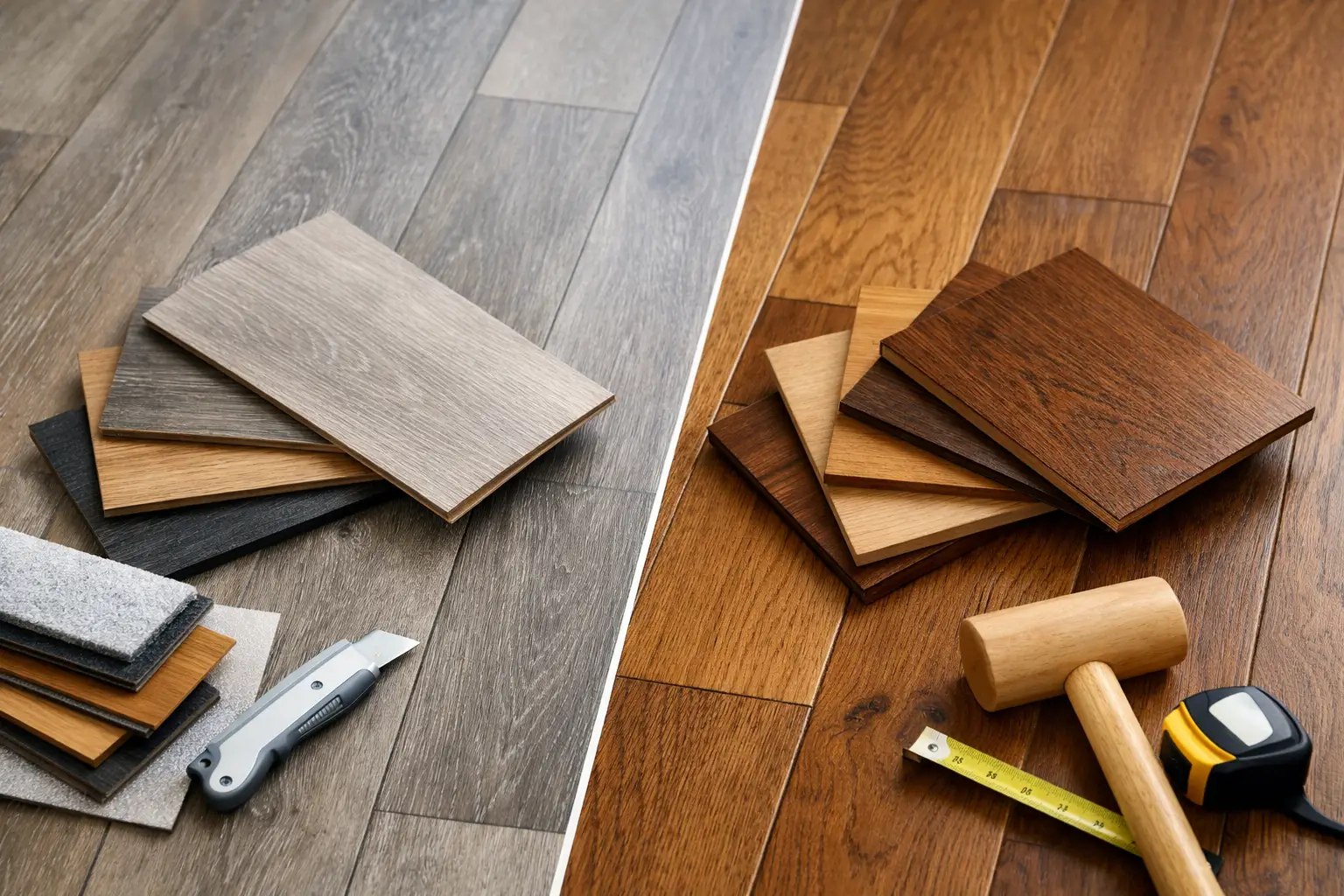
A floor choice usually looks simple until you imagine living with it every day. That is where the vinyl plank vs hardwood question gets real. The right answer depends less on showroom samples and more on how your home is used, how much maintenance you want, and how long you plan to stay.
For busy homeowners and property managers, flooring is not just about appearance. It affects cleaning time, repair costs, comfort underfoot, and how well a space holds up to kids, pets, snow, mud, tenants, and everyday wear. If you are choosing between vinyl plank and hardwood, it helps to look past the sales pitch and focus on what each material does well and where it falls short.
Vinyl plank vs hardwood at a glance
Vinyl plank is a manufactured flooring product designed to mimic the look of real wood. It is typically built in layers, with a wear layer on top and either a flexible or rigid core underneath. Many products are waterproof or highly water-resistant, which is a big reason they have become so popular in kitchens, bathrooms, basements, and rental properties.
Hardwood is exactly what it sounds like - real wood cut into planks, then finished and installed over a subfloor. It brings natural grain, variation, and warmth that manufactured flooring still works hard to copy. It also has a longer track record and, in many homes, stronger appeal to future buyers.
Neither option is automatically better. Vinyl plank wins in some homes because it is practical and forgiving. Hardwood wins in others because it adds character and long-term value that is hard to fake.
Cost matters, but so does the full picture
If the budget is driving the decision, vinyl plank usually has a lower upfront cost. Material prices are often lower, and installation can be faster and simpler, especially with click-lock products. That can make a noticeable difference when you are flooring a large area or managing a rental turnover on a deadline.
Hardwood usually costs more at the start. The material itself is more expensive, and installation often takes more skill, prep, and finishing work. If the subfloor needs correction or the wood needs acclimation, that adds time and cost, too.
Still, the upfront price is only part of the story. Hardwood can be refinished multiple times, which helps extend its life. Vinyl plank cannot be sanded and refinished. Once it is deeply scratched, dented, or worn through, replacement is the only real fix. So while vinyl can save money early, hardwood may offer better long-term value in the right home.
Durability depends on what your floors deal with
This is where lifestyle should lead the decision.
Vinyl plank handles moisture better than hardwood. In homes where wet boots, spilled water, pet accidents, or frequent mopping are part of normal life, that matters. For mudrooms, laundry areas, bathrooms, and lower-level spaces, vinyl often gives homeowners more peace of mind.
Hardwood is more vulnerable to water. Even small leaks or repeated exposure to moisture can cause cupping, swelling, staining, or gaps. That does not mean hardwood is fragile. It can last for decades under normal conditions. But it does need a more controlled environment and quicker response when water shows up.
For scratch resistance, the answer is mixed. Good vinyl plank with a strong wear layer can do very well in active households. But lower-quality products can gouge or peel, and heavy furniture can leave dents. Hardwood can scratch too, especially softer species, but many homeowners accept that as part of real wood aging. The difference is that hardwood can often be repaired or refinished later, while damaged vinyl is usually replaced plank by plank.
Appearance and feel are not the same thing
If your top priority is authenticity, hardwood has the edge. Real wood has natural variation in color, grain, and texture that gives a room depth. It also ages in a way many homeowners appreciate. As it develops character over time, it can make the home feel more established and custom.
Vinyl plank has improved a lot. Some products look surprisingly convincing, especially from a standing position. For many homeowners, the visual difference is small enough that the practical benefits outweigh the fact that it is not real wood.
Underfoot, though, the two materials feel different. Hardwood is generally warmer and more solid. Vinyl plank can feel slightly hollow or firmer depending on the product and underlayment. That may not matter in every room, but in a main living space where you spend a lot of time, it can shape how the room feels day to day.
Maintenance is where many people make up their minds
Homeowners often love the idea of hardwood until they think about upkeep. Hardwood needs more care. You have to avoid excess water, clean with the right products, and stay on top of felt pads and furniture movement. It is manageable, but it asks for attention.
Vinyl plank is easier to live with. Sweeping and damp mopping usually cover most cleaning needs, and you do not have to stress over every splash near the sink. For second homes, busy families, and properties that need to be easy to maintain between occupants, that simplicity is a real advantage.
That said, easier maintenance does not always mean better investment. Some homeowners are happy to do a little more work in exchange for the look and lifespan of hardwood. Others want flooring they can install and stop worrying about. Both are reasonable.
Resale value and buyer perception
When homeowners ask about vinyl plank vs hardwood, they are often really asking what future buyers will think.
In many markets, hardwood still carries a stronger resale appeal. Buyers tend to recognize it as a premium material, and it can help a home feel more established and higher-end. In older homes or custom homes, hardwood often fits the architecture better too.
Vinyl plank does not always hurt resale, especially when it is well chosen and professionally installed. In fact, buyers often appreciate the durability and low maintenance. But it usually does not carry the same prestige as real wood. If resale is a major goal and the home supports the investment, hardwood often has the advantage.
The exception is when vinyl is simply the smarter fit for the space. In lower-level rooms, high-moisture areas, or homes where durability matters more than tradition, quality vinyl plank can make more sense while still looking good.
Room-by-room choices usually work better than one rule
A lot of homeowners think they need one flooring answer for the whole house. Often, the better approach is to match the material to the room.
Where vinyl plank tends to make more sense
Vinyl plank is often the safer choice in bathrooms, laundry rooms, basements, mudrooms, and some kitchens. These spaces see water, grit, and heavier cleanup demands. For rental properties, it can also be a strong option because it is cost-effective and easier to maintain between tenants.
a single flooring solutionWhere hardwood tends to shine
Hardwood is often worth the investment in living rooms, dining rooms, bedrooms, hallways, and main-level spaces where appearance and long-term value matter most. In those areas, the warmth and authenticity of real wood are easier to appreciate.
In many homes, a mixed approach works best. Hardwood in the main living areas and vinyl plank in moisture-prone rooms can give you the benefits of both without forcing a one-size-fits-all decision.
Installation quality matters as much as material
A great product installed poorly will still disappoint you.
Subfloor prep, transitions, layout, spacing, and finish details all affect how the floor performs and looks over time. Gaps, uneven planks, hollow spots, poor cuts, and rushed trim work can make even premium flooring feel cheap. That is one reason homeowners often benefit from talking through the full scope before making a material choice.
At Salida Home Services, we encourage clients to make this kind of decision based on real use, not just trends. The best floor is the one that fits your household, your budget, and your expectations a few years from now, not just the sample board you liked for five minutes.
How to decide between vinyl plank and hardwood
If you want the most forgiving, lower-maintenance option, vinyl plank is usually the practical winner. If you want the most authentic look and stronger long-term appeal, hardwood usually earns its higher price.
If your home sees a lot of moisture, pets, traffic, or rental turnover, vinyl plank may save you stress. If you are improving a forever home or upgrading a primary living space where warmth and character matter most, hardwood may be the better investment.
A good flooring decision should make your home easier to live in, not harder to maintain. Start with how the room is used, be honest about your budget and tolerance for upkeep, and choose the material that will still feel right after the new-project excitement wears off.
Aurthor:
Robby Bates