A loose piece of siding, a soft spot near a window, or a gutter that spills water beside the foundation can look like a small weekend problem. In a mountain-valley climate, though, those details can become expensive fast. Timely exterior repairs protect the structure behind the surface - your framing, insulation, foundation, and the spaces your family or tenants depend on.
The goal is not to repair everything at once. It is to recognize which issues can wait, which ones need attention before the next hard rain or freeze, and which repairs should be handled together so the finished work lasts. For homeowners, second-home owners, and property managers, a clear plan replaces uncertainty with practical next steps.
Why Exterior Repairs Deserve Early Attention
Your home’s exterior is its first defense against moisture, sun, wind, pests, and temperature swings. When that defense has a gap, water rarely stays where it first enters. It can travel behind siding, beneath trim, around windows, or into roof edges before it shows up as a stain or soft wall inside.
That is why a small repair can prevent a much larger project. Replacing failed caulk around a window may help prevent damaged trim. Correcting a gutter outlet may keep runoff from saturating soil near the foundation. Securing loose fascia can stop wind from pulling apart a larger section of roof edge.
Waiting is not always wrong. A faded painted surface may be mostly cosmetic, while a hairline crack in a concrete walkway may be stable for years. The decision depends on whether the issue affects water control, safety, structural materials, or the home’s ability to stay secure. A good contractor should explain that difference plainly, rather than pressure you into work that doesn't fit the home's condition.
The Exterior Problems That Should Move to the Top of the List
Some exterior concerns are easy to see but hard to prioritize. Start with items that can let water in, direct water toward the house, create a safety concern, or worsen quickly as weather changes.
Roof Edges, Gutters, and Drainage
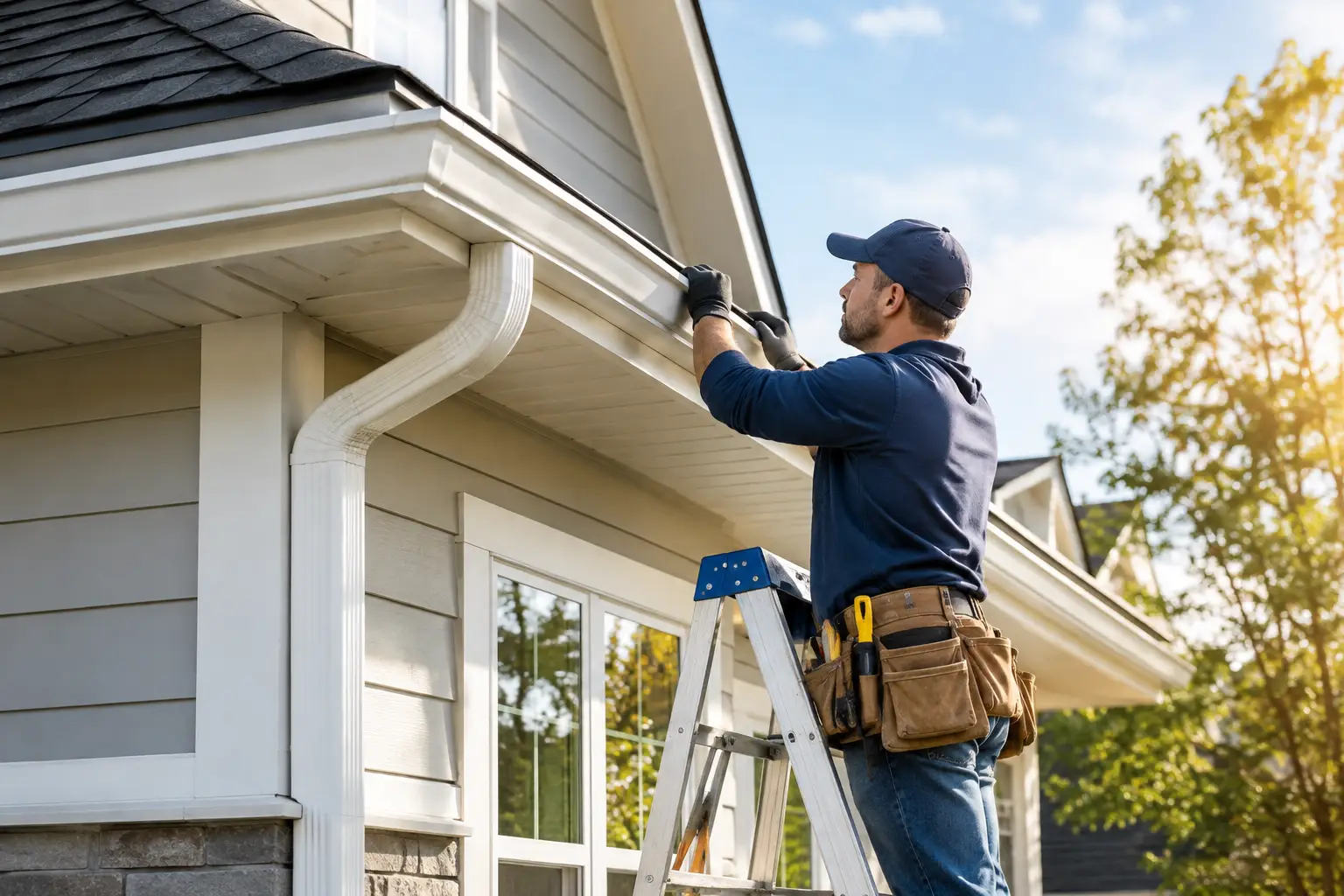
Gutters are not just an appearance detail. They move roof runoff away from siding, walkways, landscaping, and foundations. Overflowing gutters, detached downspouts, loose brackets, and water pooling near the house deserve prompt attention.
Look for staining on siding below gutters, soil erosion, standing water, or ice buildup in areas where water should drain freely. In the Arkansas River Valley, snowmelt and seasonal storms can expose drainage problems that were easy to miss during dry periods. The repair may be straightforward, but the cause matters. A gutter that repeatedly overflows could be clogged, undersized, poorly sloped, or receiving too much water from a roof valley.
Siding, Trim, and Exterior Paint
Cracked boards, open seams, peeling paint, and deteriorated trim can let moisture into vulnerable materials. Wood trim around windows, doors, and rooflines is especially prone to damage because it often receives direct sun and repeated wet-dry cycles.
Not every worn-looking board needs full replacement. Sometimes a localized repair, proper sealing, and repainting will restore protection. If rot extends behind the visible trim or multiple siding areas are failing, a broader repair may be the more economical choice. The right scope should be based on what is actually sound, not just what is easiest to cover up.
Windows, Doors, and Exterior Openings
A door that sticks, a window with cracked exterior caulk, or a gap beneath weatherstripping can affect comfort and appearance. These openings are common places for drafts, water intrusion, and insects.
Watch for signs such as soft wood around frames, staining below windows, noticeable drafts, loose thresholds, or doors that no longer latch smoothly. Sometimes an adjustment or new weatherstripping is enough. Other times, failed flashing, damaged trim, or movement in the surrounding structure needs to be addressed before finishing the surface.
Decks, Stairs, Railings, and Walkways
Outdoor living areas take constant punishment from sun, moisture, foot traffic, and snow. Loose railings, soft deck boards, uneven steps, and shifting pavers are more than maintenance issues - they can create a real safety risk for residents and guests.
Check deck posts where they meet the ground, the house connection, stair stringers, handrails, and fasteners. For concrete or masonry walkways, watch for trip hazards, widening cracks, and drainage that pushes water toward the home. Don't push safety-related repairs to the bottom of the list just because they are outdoors.
A Practical Way to Plan Exterior Repairs
The most efficient projects begin with a careful walkthrough. You do not need contractor-level knowledge to gather useful information. Take notes after rain or snowmelt, photograph visible damage, and write down when you first noticed the issue. For rental or second homes, regular exterior checks are especially useful because small changes can go unnoticed between visits.
During a consultation, ask what is causing the problem, not only what will be replaced. Ask whether adjacent materials should be repaired at the same time and what could happen if you wait six months or a year. Clear answers help you compare priorities instead of comparing vague estimates.
It can also make sense to group related work. Repairing damaged fascia while addressing gutter problems, or replacing rotted window trim before painting, can reduce duplicated labor and produce a cleaner result. On the other hand, combining unrelated projects just to make a larger job isn't always the best value. A dependable plan respects your budget and handles urgent concerns first.
What Quality Exterior Repair Work Should Include
Good workmanship starts before the first board is removed. The work area should be assessed for hidden damage, proper materials, drainage conditions, and how new work will connect to existing surfaces. Matching a home's look matters, but performance matters more. New trim or siding must be properly flashed, sealed, fastened, and finished so it does not repeat the same failure.
Communication matters just as much. Exterior repair work can uncover conditions that were not visible at the start, such as rot behind trim or water damage below a roof edge. When that happens, you should know what was found, why it matters, your options, and how the change affects cost before additional work moves ahead.
For many homeowners, the best contractor is not the one who promises the fastest answer to every problem. It is the one who gives a realistic scope, respects the property, keeps the site orderly, and stands behind the repair. Salida Home Services approaches exterior work with that practical, owner-led standard: clear pricing, direct communication, and repairs completed with the same care we would want for our own homes.
Seasonal Checks That Help You Stay Ahead
A few inspections each year can make exterior maintenance far less stressful. In spring, look for winter damage, clogged gutters, loose flashing, cracked caulk, and drainage issues after snowmelt. Summer is a good time to evaluate paint, siding, decks, and sun-exposed trim.
Before fall weather arrives, make sure gutters and downspouts are clear, exterior openings are sealed, and railings or stairs are secure. During winter, watch for ice buildup, unusual drafts, or water appearing where it should not. You don't need to fix every cosmetic flaw immediately, but you do want to catch changes before moisture has time to cause hidden damage.
Exterior repairs are easier to manage when they are treated as protection, not panic. If something outside your home looks questionable, have it evaluated while the repair is still small enough to give you options.
Aurthor:
Robby Bates