You finish painting a wall, the light hits it just right, and there it is - a small round bump or crack that seems to appear out of nowhere. If you have been wondering what causes drywall nail pops, the short answer is movement. The longer answer is that several kinds of movement can push a fastener head against the painted surface until the drywall mud cracks, lifts, or shows a visible bulge.
Nail pops are common in both older homes and newer construction. They can show up on walls or ceilings, and while they often look minor, they tend to bother homeowners because they make a finished surface look sloppy. The good news is that most nail pops are repairable. The part that matters is figuring out why they happened in the first place, because a cosmetic patch alone does not always solve the problem.
What causes drywall nail pops in the first place?
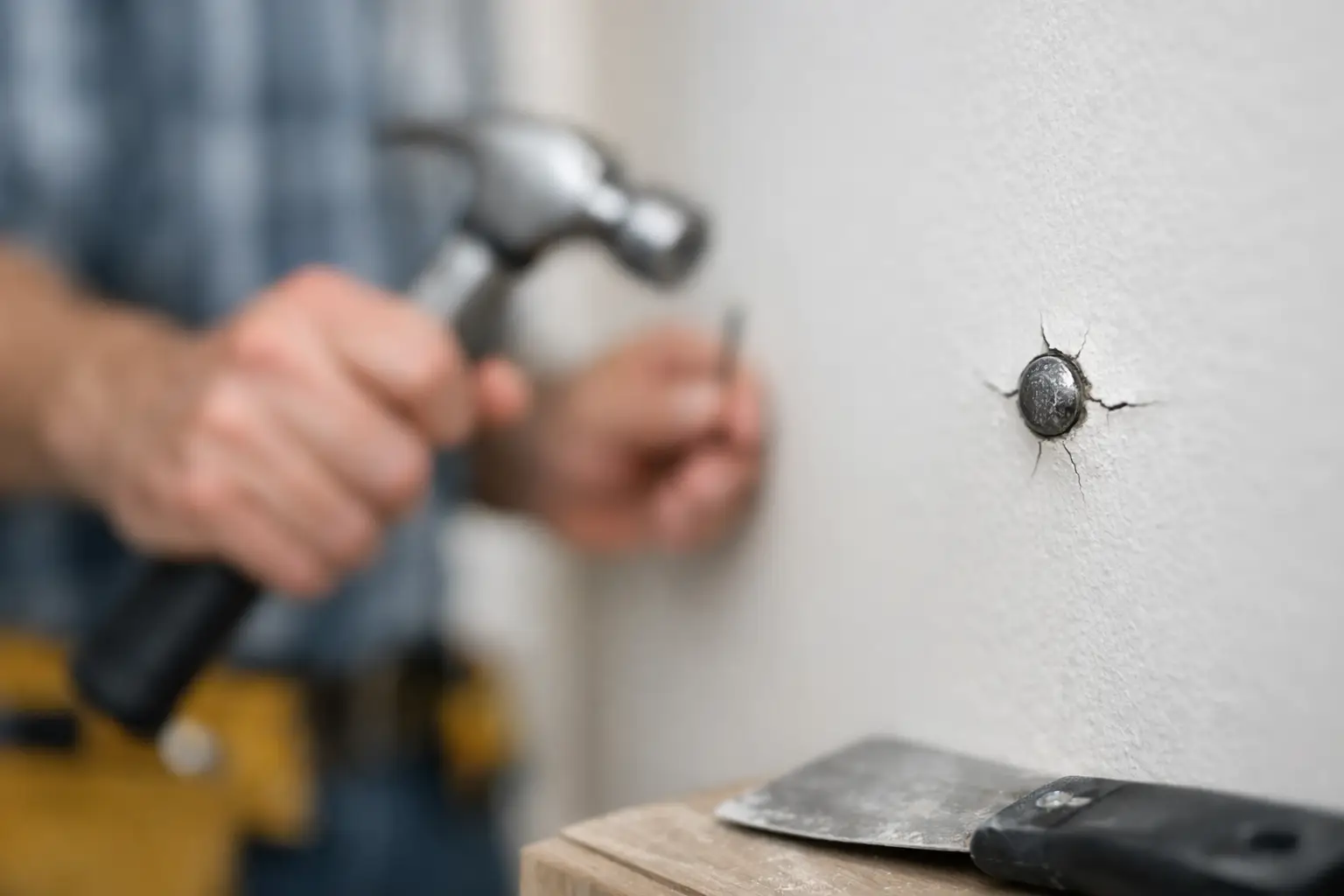
A drywall nail pop occurs when the drywall sheet shifts slightly and the fastener no longer sits tight as it should. Even though people still call them "nail pops," the same issue can occur with drywall screws. What you are seeing is usually the joint compound breaking around the head of the fastener after the wall or ceiling has moved enough to create pressure.
That movement can come from normal settling, seasonal expansion and contraction, framing lumber drying out, vibration, or improper fastening during installation. In some homes, it is one isolated area. In others, repeated pops in the same room can indicate a larger issue with framing movement or moisture.
Natural settling and seasonal movement
Homes move. Not dramatically in most cases, but enough that drywall surfaces respond over time. As a house settles, framing members can shift just enough to loosen the grip between the drywall and the fastener. In a place with distinct seasonal swings, temperature and humidity changes can also cause wood framing to expand and contract.
That is one reason nail pops may seem to appear after winter or during dry periods. The framing changes shape slightly, the drywall resists that movement, and the weakest point often becomes the fastener location.
Lumber shrinkage
One of the most common causes is wood shrinkage. When framing lumber dries after construction, studs and ceiling joists can twist, bow, or shrink a bit. That small change can reduce the pressure holding the drywall tightly in place. Once that happens, the nail or screw head can start pushing outward against the finished surface.
This is especially common in newer homes. A house may be structurally fine, but as the framing settles into its long-term moisture balance, small cosmetic issues like nail pops show up.
Poor fastening during installation
Sometimes the problem starts on day one. If the drywall was fastened too close to the edge, not driven to the right depth, or not secured to solid framing, it is more likely to pop later. Drywall nails are more prone to backing out than screws, which is one reason screws became the standard in many installations.
Adhesive can also make a difference. When drywall is installed with both adhesive and properly spaced screws, the finished wall tends to stay more stable. If adhesive was skipped and the fastening pattern was weak, movement shows up faster.
Vibration and daily wear
Not every nail pop is caused by major house movement. Repeated vibration can play a role too. Doors slamming, garage doors operating, foot traffic above a ceiling, and even mechanical systems can contribute over time. In high-use homes or rental properties, those small repeated impacts add up.
Usually, vibration alone does not create widespread nail pops unless the fastening was already marginal. But in a weak spot, it can be enough to surface the problem.
Moisture problems
Moisture changes the equation. If drywall or framing gets damp from a roof leak, a plumbing leak, condensation, or high humidity, the materials can swell and then contract as they dry. That movement often leads to cracking, staining, and fastener issues.
If you see a nail pop along with discoloration, peeling paint, soft drywall, or a sagging ceiling, treat it as more than a cosmetic repair. In that case, the visible bump may just be the symptom, not the real problem.
Are drywall nail pops serious?
Most of the time, drywall nail pops are cosmetic. They do not usually mean the house is unsafe or that a wall is failing. A single pop on a bedroom wall or hallway ceiling is often just part of normal house movement.
Still, it depends on the pattern. If you notice a few isolated spots, especially in an older home, the repair is usually straightforward. If you are seeing a lot of them all at once, especially paired with cracks around doors and windows, sloping floors, sticking doors, or water damage, it is worth a closer look.
In other words, a nail pop is usually small, but context matters.
Why nail pops sometimes come back
This is the part that frustrates homeowners. You patch the spot, repaint, and a few months later the same area shows through again. That usually happens because the original fastener was never truly stabilized.
If someone simply covers the bump with joint compound and paint, the drywall can still move at that point. The better repair is to secure the drywall again with new screws driven into solid framing near the popped fastener, then remove or set the loose fastener, tape if needed, apply compound, sand, prime, and repaint.
That extra step matters because the goal is not just hiding the blemish. It is reattaching the drywall to stop it from flexing.
How to tell whether it is a simple fix or a bigger issue
A simple fix is more likely when the pop is isolated, the surrounding drywall feels solid, and there are no signs of moisture or wider cracking. In that case, the drywall likely just loosened at one fastener location.
A more involved repair may be needed when multiple pops appear in a line, a ceiling has several loose spots, or the wall feels like it moves when pressed. That can mean the drywall was not well secured in the first place, or the framing itself has shifted enough that more than a patch is needed.
Moisture changes everything. If the area has stains, soft texture, mildew smell, or recurring paint damage, the source of water needs to be addressed before any finish repair will last.
What causes drywall nail pops on ceilings?
Ceilings tend to show nail pops more clearly because gravity is constantly working against the drywall. Any minor loosening between the sheet and the joist becomes visible faster overhead than on a vertical wall. Add foot traffic from an upper floor or attic access, and ceiling movement can become more noticeable.
Ceiling pops are still often repairable, but they deserve a little more attention. If the drywall is sagging or you see more than a few popped fasteners grouped together, it is smart to have the area checked before just patching it.
Can you prevent drywall nail pops?
You can reduce the chances, but you cannot guarantee they will never happen. Good installation practices make the biggest difference. Proper screw spacing, solid framing attachment, correct fastener depth, and adhesive where appropriate all help drywall stay put.
For existing homes, prevention is more about managing the conditions that cause excess movement. Keeping indoor humidity more consistent, addressing leaks quickly, and fixing structural or framing issues early can all limit repeat problems. If you are remodeling, it is also worth choosing a contractor who treats wall prep and fastening as more than a quick cover-up step.
In a place like the Arkansas River Valley, where homes can see dry air, cold winters, and seasonal shifts, small material movement is not unusual. That does not mean every wall issue is serious, but it does mean repairs should be done with the local conditions in mind.
When to call for help
If you are comfortable with drywall repair, a minor isolated pop can be a manageable project. But matching texture, blending paint, and making a repair actually stay fixed are often harder than they look. The challenge is not filling the spot. The challenge is finding out whether the drywall is still secure.
If the area keeps reopening, if there are several pops in one room, or if you suspect moisture or framing movement, it makes sense to bring in a professional. A good repair should leave you with a smooth surface and confidence that the problem was addressed, not just hidden.
At Salida Home Services, this is the kind of issue we like to solve the practical way - look at the cause, explain what is going on, and repair it so you are not dealing with the same spot again next season.
A drywall nail pop may be small, but it is often your home telling you something moved. When you respond to the cause instead of just the blemish, the repair tends to look better and last longer.
Drying out of framing lumber
Aurthor:
Robby Bates