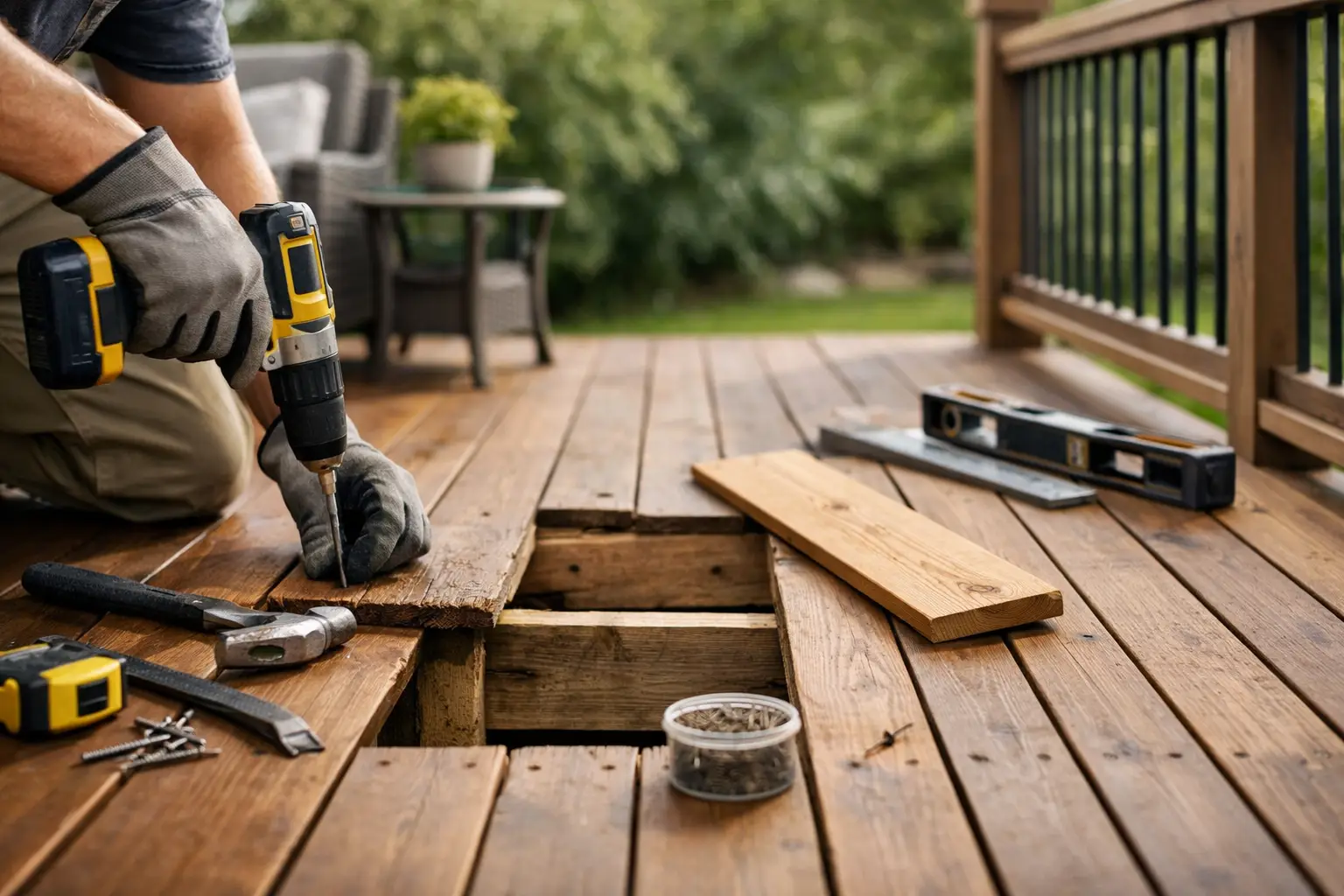
That soft spot near the stairs is usually where deck problems stop being cosmetic. One loose board or a slight wobble in the railing can lead to rot, structural weakness, and a safety issue faster than most homeowners expect. This deck repair guide is built to help you figure out what you’re really looking at, what can be repaired, and when it makes more sense to bring in a professional before a small problem spreads.
A deck takes a beating. Sun, snow, rain, foot traffic, furniture drag, and neglected maintenance all add up. In Colorado especially, freeze-thaw cycles can loosen fasteners, crack boards, and accelerate moisture damage in places that are easy to miss.
What to check first in a deck repair guide
Start with the areas that affect safety first, not appearance. Surface stains and faded finish can wait. Movement, decay, and failing connections should not.
Walk the deck slowly and pay attention to how it feels underfoot. Bouncy sections, soft spots, and boards that flex too much are warning signs. Then look at the railing and stairs. If the railing shifts when you lean on it, or the stair treads feel uneven, that’s not a minor annoyance. It’s a repair issue.
The most important areas to inspect are the ledger board where the deck connects to the house, the support posts, beams, joists, stair stringers, railing posts, and any place where wood meets concrete or where water can collect. Damage often starts low and spreads up, or starts at a fastener and works outward.
You should also look underneath if the deck has open access. Rot, splitting, rusted hardware, and insect damage are often easier to spot from below than from the surface.
Common deck problems and what they usually mean
Cracked or splintering deck boards are common, and sometimes they’re just worn out from age and weather. If the damage is limited to a few boards and the framing below is solid, those boards can often be replaced without rebuilding the whole deck.
Loose railings are more serious than they look. In many cases, the issue is not the railing itself but the way the post is attached to the frame. Cosmetic tightening may help for a short time, but if the post connection is weak, the repair needs to address that structure.
Rot is the big one. Wood rot usually shows up as soft, darkened, crumbly material, often near end cuts, joints, fasteners, and shaded areas that stay damp. Once rot starts, paint or stain will not fix it. The affected material needs to be removed and replaced. The real question is how far the damage has spread.
Popped nails and loose screws can point to wood movement, old fasteners, or framing that is no longer holding properly. Refastening may solve the problem if the surrounding wood is still sound. If not, the fastener issue is just a symptom.
Uneven stairs or sagging sections of deck can mean framing trouble. That might be a failing stringer, a settling footing, undersized framing, or water damage at the points where structural members meet. This is where do-it-yourself repair starts to get risky.
Repairs you may be able to handle yourself
If the deck is generally sound and the issue is limited, some repairs are manageable for a capable homeowner. Replacing a few deck boards, swapping out corroded screws, sanding rough spots, and refinishing the surface are all reasonable jobs if you have the right tools and know how to match materials.
Simple repairs work best when the problem is isolated and easy to see. For example, one split board in the middle of an otherwise solid deck is different from several soft boards clustered near the ledger or stairs. One is a material replacement. The other may indicate deeper moisture damage.
Even with basic repairs, material choice matters. Pressure-treated lumber, cedar, redwood, and composite decking all behave differently. A repair that looks fine on day one can fail early if the replacement board, fasteners, or finish are not right for the existing deck.
When should deck repair be left to a professional
A good deck repair guide should be honest about the limits of patchwork. If the deck moves when it should feel solid, if multiple structural members show rot, or if the connection to the house is compromised, it’s time for a professional assessment.
The ledger board deserves special attention because it carries a major load and ties the deck to the home. If the flashing is missing, the fasteners are failing, or rot has spread into that connection, the repair needs to be done the first time correctly. Mistakes there can create both deck failure and water intrusion into the house.
Railing repairs also need more care than many people realize. Modern safety expectations are higher than what older decks were often built to meet. A railing that feels "good enough" may still be unsafe.
The same goes for footings, posts, and framing repairs. These are not areas where guesswork pays off. A dependable contractor can tell you whether the deck needs localized reinforcement, partial rebuilding, or full replacement. That saves money in the long run because you fix the real problem instead of paying twice.
How to tell whether repair or replacement makes more sense
Not every aging deck should be repaired. Sometimes replacement is the smarter investment, especially if the framing is compromised, code issues are widespread, or repairs would touch most of the structure anyway.
A repair usually makes sense when the damage is limited, the deck design still works for your needs, and the main framing is in good condition. A replacement tends to make more sense when the deck has chronic moisture problems, widespread rot, unsafe stairs or railings, or years of layered fixes that no longer add up to a durable result.
Cost is part of the conversation, but so is lifespan. Spending less now on repeated small repairs can end up costing more than rebuilding the deck correctly and getting years of reliable use out of it. There is no one-size-fits-all answer. It depends on the deck's age, the materials, the extent of damage, and how long you plan to keep the property.
For homeowners managing second homes or rental properties, reliability matters even more. A temporary fix may feel convenient, but recurring service calls, tenant complaints, or safety concerns quickly erase that savings.
A practical deck repair guide for longer-lasting results
Good deck repair is not just replacing damaged pieces. It also means correcting the conditions that caused the damage.
Water management is usually part of the answer. That may mean improving drainage around posts, adding or correcting flashing, properly spacing boards, sealing exposed cuts, or replacing failed caulk where appropriate. If water keeps getting trapped, the new material will age the same way the old material did.
Hardware matters too. Exterior-rated structural screws, joist hangers, post anchors, and approved connectors are worth using. Mixing the wrong fasteners with treated lumber can lead to corrosion and premature failure. It’s a detail many homeowners never see, but it affects how long the repair lasts.
Finish is the last step, not the fix. Stain and sealant help protect the deck surface, but they only work if the wood underneath is dry and sound. Applying finish over hidden damage may improve appearance for a season, but it does not restore strength.
What a solid repair process should look like
A trustworthy deck repair process starts with a real inspection, not a quick glance and a rough guess. You want clear communication about what is damaged, what is still sound, and what options make sense. That includes discussing any scope changes before work begins if more damage is uncovered after opening up the deck.
From there, the repair should focus on safety and structure first, then on surface materials, and finally on finish work. If a contractor jumps straight to cosmetic improvements without addressing framing, connections, or moisture issues, that is a red flag.
You should also expect transparent pricing and realistic expectations. Some repairs are straightforward. Others reveal hidden issues once boards come up. The important thing is being told what is changing and why, before extra work moves forward.
That owner-led, no-surprises approach is exactly what many homeowners want when they call a local contractor like Salida Home Services. Deck work is much less stressful when you know the person doing the job is focused on lasting results, not shortcuts.
Preventing the next repair
Once your deck is repaired, a little maintenance goes a long way. Keep debris from piling up between boards. Move planters occasionally so moisture does not stay trapped in one spot. Check railings and stairs at the start of each season. Refinish wood surfaces on a schedule that matches the material and sun exposure, not just when the deck starts looking worn.
It also helps to pay attention after heavy snow, hard rain, or long periods of freeze-and-thaw. Small changes in movement, cracking, or discoloration are easier to deal with early than after another season of exposure.
If your deck has been on the to-do list for a while, start with the safety questions first. A deck should feel solid, dry, and dependable every time someone steps onto it. If it doesn’t, getting clear answers now is the best way to protect your home, your budget, and the people using that space.
Aurthor:
Robby Bates