If your windows stick, draft, fog up between panes, or make every winter morning feel colder than it should, replacement stops being a cosmetic project and becomes a practical one. Knowing how to choose replacement windows can save you from overspending, underbuying, or ending up with windows that look good on day one but disappoint a year later.
For most homeowners, the real challenge is not finding windows. It is figuring out which windows make sense for the house, the climate, and the budget. The right choice should improve comfort, reduce maintenance, and fit the home well enough that it looks like it belongs there.
How to choose replacement windows without overcomplicating it
A good window decision usually comes down to five things: why you are replacing them, what frame material fits your priorities, what glass package works in your climate, which style suits the room, and whether the installation will be done correctly. Miss any one of those, and even a high-quality product can feel like the wrong investment.
Start with the reason for the project. Some homeowners want better energy performance. Others are dealing with water intrusion, damaged frames, or hard-to-operate sashes. Property owners may be trying to reduce maintenance calls in a rental. When you are clear on the main problem, it becomes easier to sort through the sales language and focus on what matters.
Decide if you need full replacement or an insert window
Not every project calls for the same approach. If the existing frame is still in great shape and the issue is mainly with the sash or glass, an insert replacement may work. That option can be less invasive and sometimes less expensive.
If the frame has rot, water damage, structural issues, or poor insulation around the opening, a full-frame replacement is often the better long-term move. It costs more upfront, but it allows the contractor to inspect what is happening around the opening and correct problems before they get worse. This is one of those areas where cheaper can become more expensive later.
Choose frame material based on maintenance, budget, and appearance
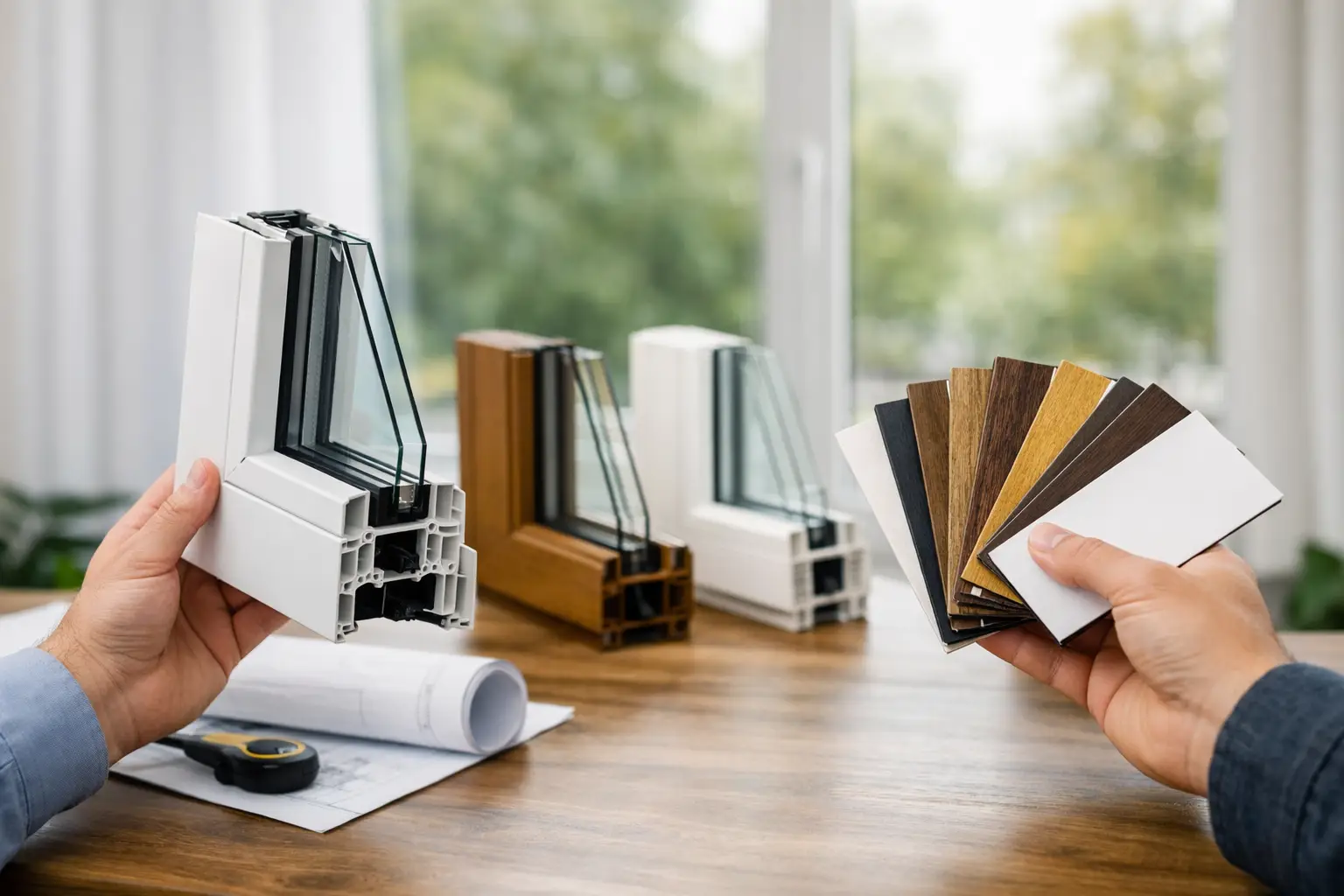
Frame material affects cost, maintenance needs, durability, and the overall look of the house. There is no perfect material for every home. There is only one that best fits your priorities.
Vinyl is popular because it is cost-effective, energy-efficient, and low-maintenance. It works well for many homeowners who want solid performance without constant upkeep. The trade-off is that color choices and profile options can be more limited, and lower-end vinyl products may not hold up as well over time.
Wood offers a classic appearance that many people prefer, especially in older or higher-detail homes. It can be repaired and refinished, which is a real advantage in some settings. The downside is maintenance. Wood needs more care, and if that care is neglected, moisture can become a problem.
Fiberglass tends to be durable, stable, and energy efficient. It handles temperature swings well and can be a strong choice for long-term value. It usually costs more than vinyl, but many homeowners consider it worthwhile if they plan to stay in the home for years.
Aluminum is strong and slim, which can be appealing visually, but it is typically less efficient than other options unless it includes thermal breaks. In colder climates, that matters.
Match the material to the home, not just the showroom sample
A window can look great under indoor lighting and still feel wrong once it is installed. Think about your siding, trim, interior finishes, and how visible the windows are from the street. A practical choice should still look right on the house.
If you manage a rental or second home, maintenance may matter more than fine design details. If you are updating a primary residence and care about architectural character, appearance may deserve more weight. Both are valid priorities.
Pay close attention to glass and energy performance
When people ask how to choose replacement windows, they often focus on the frame first. In reality, the glass package has a major impact on comfort and efficiency.
Double-pane glass is standard in many replacement projects and is a solid choice for many homes. Triple-pane glass can further improve performance, but it is not automatically the best value for every budget or every house. Whether the upgrade makes sense depends on the climate, exposure, and how much performance you want relative to the added cost.
Low-E coatings help reflect heat and improve efficiency. Gas fills between panes can also improve insulation. These features are common in modern windows, but the specific combination matters. A south-facing room with strong sun exposure may benefit from a different setup than a room on the shaded side of the house.
In the Arkansas River Valley, temperature swings and seasonal weather can make energy performance more than a selling point. Good glass can help keep rooms more comfortable and reduce the strain on heating and cooling systems. That does not mean you need the most expensive package available. It means you should choose one that makes sense for how the home actually performs.
Look at ratings, but keep them in context
U-factor, Solar Heat Gain Coefficient, and air leakage ratings can help compare products. Lower U-factor generally means better insulation. Solar Heat Gain Coefficient measures how much solar heat gets through the glass. Air leakage ratings show how much air can pass through the window assembly.
These numbers matter, but they are not the whole story. A well-rated window installed poorly can still draft, leak, or fail early. Ratings are useful for narrowing down products. Installation quality is what turns those specs into real-world results.
Pick the right operating style for each room
Window style affects ventilation, cleaning, appearance, and function. It should fit how you use the room, not just what looks best in a catalog.
Double-hung windows are a familiar choice because they work in many home styles and are often easy to clean. Casement windows can seal tightly and open fully for ventilation, which some homeowners prefer in kitchens or living areas. Sliding windows are simple and can work well in wider openings, though they may not seal as tightly as other styles. Picture windows bring in light and views but do not open, so they are usually best paired with operable windows nearby if ventilation matters.
In bathrooms, bedrooms, and hard-to-reach spaces, function should lead the decision. A window over a sink, for example, may be easier to use as a casement window than a double-hung window. In a bedroom, egress requirements may also come into play if the opening serves as an emergency exit.
Think beyond the window itself
Replacement windows affect trim, drywall, siding, and finish details. That is one reason a low quote is not always the best quote. If important finish work is excluded or installation steps are vague, you may end up paying for corrections later.
Ask what is included. Will exterior trim be replaced if needed? Will interior casing be disturbed? How will gaps be insulated and sealed? What happens if hidden damage is found once the old window comes out? Clear answers up front usually point to a smoother project.
This is also where working with a contractor who communicates well makes a real difference. Homeowners and property managers do not just need someone to install a product. They need someone who will explain the scope, flag issues early, and treat the home with respect while the work is being done.
How to choose replacement windows that fit your budget
A smart budget is not about finding the cheapest line item. It is about balancing upfront cost with long-term performance.
If you are replacing windows in a forever home, it may make sense to invest more in frame quality, glass performance, and finish options you will live with every day. If you are improving a rental, durability and ease of operation may matter more than premium upgrades. If the house has a few badly failing windows and several that are still serviceable, a phased approach can be more realistic than doing the whole home at once.
Try to separate must-haves from nice-to-haves. Good fit, weather resistance, and reliable operation belong in the first category. Specialty colors, grids, and premium hardware may belong in the second, depending on your priorities.
The installer matters as much as the window
Even the best replacement window can underperform if it is measured, flashed, or sealed incorrectly. That is why contractor selection should be part of the buying decision, not an afterthought.
Look for clear proposals, realistic timelines, and direct answers to questions. Ask how measurements are confirmed, how the openings are prepared, and what happens if damage is uncovered. A dependable contractor should be able to explain the process in plain language without pressuring you.
That straightforward approach is what many homeowners want from Salida Home Services and from any contractor they trust in their home. The goal is not to make window replacement feel complicated. It is to make sure the work is done right, with no surprises that could have been discussed earlier.
The best replacement windows are not the ones with the fanciest brochure. They are the ones that fit your home, solve the problems you actually have, and hold up well long after the install crew leaves. If you start there, the decision gets a lot clearer.
Aurthor:
Robby Bates