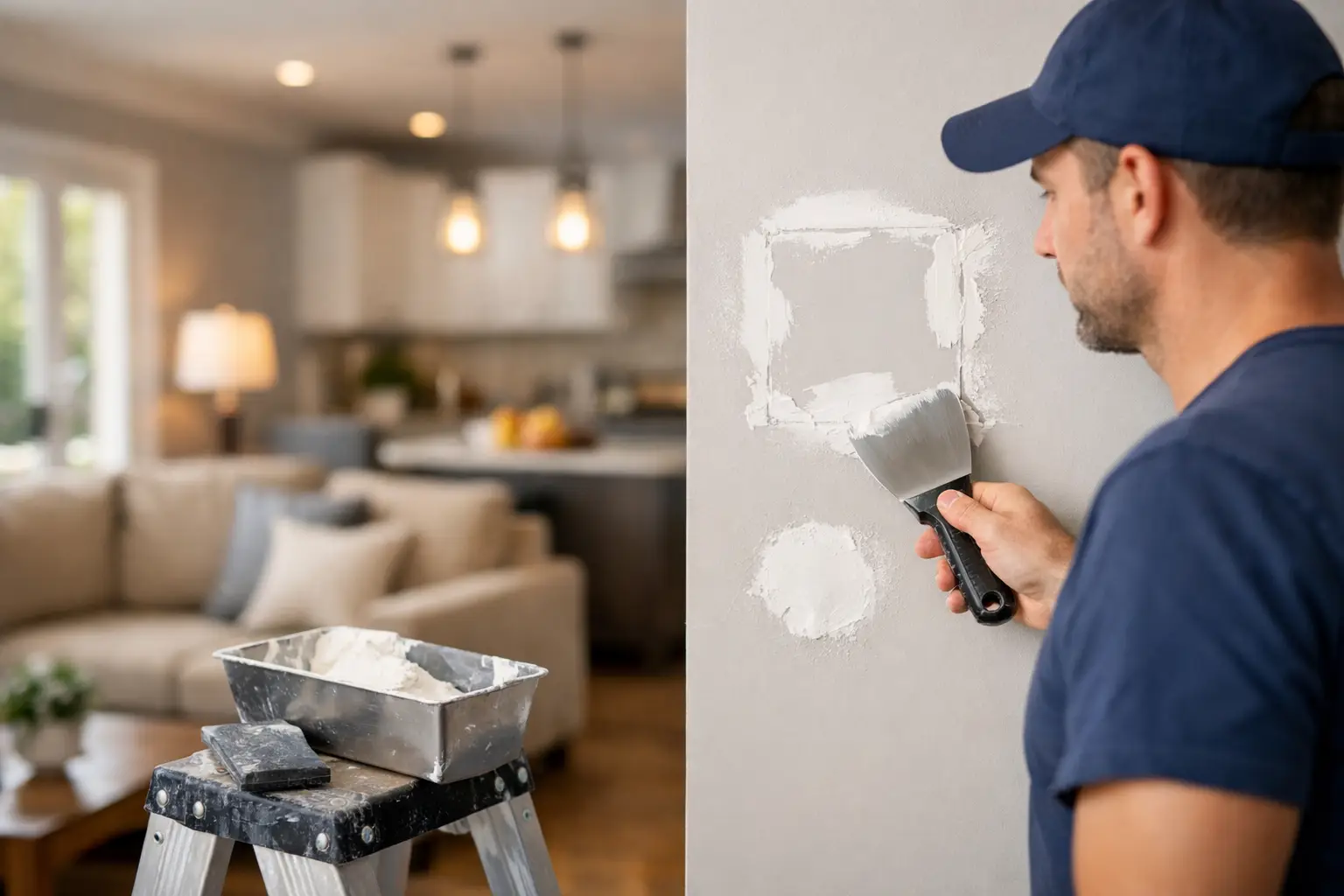
A wall does not have to be falling apart to need attention. Sometimes it is a doorknob hole in the hallway, a crack in the ceiling that keeps catching your eye, or a bad patch job from years ago that shows up every time the afternoon light hits it. That is where professional drywall repair services make a real difference. They do more than cover damage. They restore the look of the room, protect the surface underneath, and save you from repairs that keep coming back.
For homeowners and property managers, drywall problems tend to pile up quietly. A dent in one bedroom, peeling tape in a bathroom, a stained ceiling after a small leak, and suddenly, the house feels more worn than it really is. The good news is that most of these issues are repairable. The key is knowing when a simple fix will hold and when the wall needs more careful work to blend properly and last.
room's look, protect the surface beneath, and prevent recurring repairs
What drywall repair services usually cover
Drywall damage comes in a few common forms, and each one calls for a slightly different approach. Small nail holes and minor scuffs are straightforward, but larger holes, corner bead damage, seam separation, and water-related issues take more skill. A proper repair is not just about filling a spot. It is about stabilizing the damaged area, matching the surrounding texture, and leaving a surface that looks right once it is painted.
Ceilings often need the most careful attention because flaws are easier to see overhead. Cracks along seams, sagging sections, and stains from old leaks can all point to different underlying problems. Sometimes the drywall itself is still sound and only the finish layer needs work. Other times, moisture has weakened the material and replacement is the smarter option.
In lived-in homes, drywall repair also overlaps with other small carpentry or finishing needs. If trim has shifted, a door has been installed, a light fixture has been moved, or plumbing access has left an opening in the wall, the repair needs to tie everything back together cleanly. That is often where hiring a full-service contractor makes life easier.
When drywall repair is better than replacement
Not every damaged wall needs to be torn out. In many cases, repair is the more practical and cost-effective route. If the damage is localized and the surrounding drywall is solid, a skilled patch can restore the area without replacing an entire sheet or section of wall.
This is especially true for accidental impact damage, minor settling cracks, popped fasteners, and old cutouts from electrical or plumbing work. A good repair addresses the cause, reinforces the weak point if needed, and blends the finish so the patch does not stand out.
That said, there are times when replacement makes more sense. Widespread water damage, mold concerns, crumbling drywall, or repeated cracking from structural movement may call for more than a cosmetic fix. The right answer depends on what caused the problem and how far it extends. A trustworthy contractor should explain that clearly instead of pushing the bigger job by default.
Signs you should call for drywall repair services
Some drywall issues are obvious. Others are easy to ignore until they get worse. If you notice cracks widening over time, bubbling paint, soft spots, stained ceilings, loose tape, or patches that never looked right to begin with, it is worth having them looked at.
For rental properties and second homes, small drywall problems are especially easy to postpone. But they can affect how the property feels to tenants, guests, or buyers. Clean walls send a message that the home is cared for. Damaged walls do the opposite, even when the rest of the house is in good shape.
There is also a practical side. Water stains may point to an active or past leak. Repeated corner damage may suggest traffic patterns that need better protection. Cracks near doors and windows might be harmless settling, or they might be telling you something about movement in the framing. Good drywall repair starts with noticing those details instead of treating every flaw the same way.
Why patching drywall is harder than it looks
Many homeowners have tried a small drywall repair themselves and quickly learned that patching is only half the battle. The real challenge is getting the area flat, smooth, and consistent with the rest of the wall. Too many compound leaves a hump. Too little leaves a visible dip. Sanding creates dust fast, and matching an existing texture can be frustrating even for handy homeowners.
That does not mean every DIY repair is a bad idea. Very small nail holes or minor dings can often be handled at home. But once the damage is larger, is in a high-visibility area, or involves ceilings or texture matching, professional work usually saves time and yields a better result.
This is one of those areas where experience shows. A trained eye can tell how far the repair needs to be feathered out, whether tape is needed, how to avoid flashing under paint, and when a patch should be rebuilt rather than skimmed over. The work may look simple when it is done well, which is exactly the point.
What to expect from professional drywall repair services
A professional repair process should feel straightforward. First comes an honest look at the damage and its causes. If there is water intrusion, structural movement, or another issue behind the drywall problem, that should be addressed before the cosmetic repair is finished. Otherwise, the same crack or stain may return.
From there, the damaged area is cleaned, stabilized, and repaired with the appropriate materials for the damage's size and type. That may include patching, taping, applying multiple coats of compound, sanding, and texture blending. In some cases, a section of drywall is cut out and replaced to make sure the finished result is solid and clean.
Homeowners also deserve clear communication about the finish stage. Some repairs are ready for primer and paint right away. Others may need dry time between coats or a larger blending area for the texture to disappear properly. A dependable contractor will set those expectations up front, discuss scope changes before moving ahead, and respect the home while the work is being done.
Drywall repair services in occupied homes
Most drywall repairs occur in occupied homes, not on empty job sites. That matters. Dust control, furniture protection, and clean work habits are part of the service, not extras. If a bedroom, hallway, rental unit, or stairwell is in active use, the repair must be planned with that in mind.
This is where a local, owner-led contractor often stands apart. The job is not just about finishing the patch. It is about showing up when promised, communicating clearly, and treating the house with care. For busy homeowners and property managers, that reliability matters almost as much as the repair itself.
Salida Home Services approaches this kind of work the same way it handles larger projects - with practical recommendations, transparent pricing, and no surprises about the scope. That is especially valuable when drywall repair is tied to a bigger list of home maintenance items, and you want one trusted team to handle it.
Choosing the right repair approach
The best drywall repair is not always the fastest or the cheapest. Sometimes a quick cosmetic patch is enough. Sometimes, spending a little more to properly repair the damaged section saves money and frustration later. It depends on the cause of the damage, the age of the home, the existing wall texture, and how visible the area is.
If the repair is in a guest room, your tolerance for a slight mismatch may be higher than if it is in the main living room. If the property is a rental between tenants, speed may matter more. If it is your primary home and you plan to stay for years, durability and finish quality usually matter most. There is no one-size-fits-all answer, which is why honest guidance matters.
A good contractor should help you weigh those trade-offs without making the process more complicated than it needs to be. The goal is simple: solid walls, a clean finish, and confidence that the repair was done right.
When drywall damage keeps drawing your attention, it is usually worth fixing sooner rather than later. A well-repaired wall can make the whole room feel cared for again, and sometimes that small improvement changes the way the entire home feels.
Aurthor:
Robby Bates