A backsplash usually looks like a finish decision, but in real kitchens it works harder than people expect. It catches grease, steam, tomato sauce, coffee splatter, and daily wear right behind the busiest surfaces in the house. When homeowners ask about the best kitchen backsplash materials, they are usually not just asking what looks good. They are asking what will hold up, what will stay easy to clean, and what will still feel like a smart choice a few years from now.
That answer depends on how you use your kitchen, how much maintenance you want, and whether this is your forever home, a rental, or a practical update before resale. The right backsplash should look finished and intentional, but it also needs to make everyday life easier.
How to choose the best kitchen backsplash materials
Before picking a color or pattern, it helps to think like a contractor instead of a shopper. The best material for one kitchen can be the wrong call for another.
If you cook often, durability and cleanability matter more than a trendy texture. If you manage a rental property, replacement cost and long-term maintenance may matter more than custom detail. If your counters already have a lot of movement or veining, a simpler backsplash often creates a cleaner result.
The other big factor is installation. Some materials are forgiving and budget-friendly. Others look excellent but need more precise prep, better wall conditions, or more labor. That affects both cost and timeline.
Best kitchen backsplash materials by real-world use
Ceramic tile
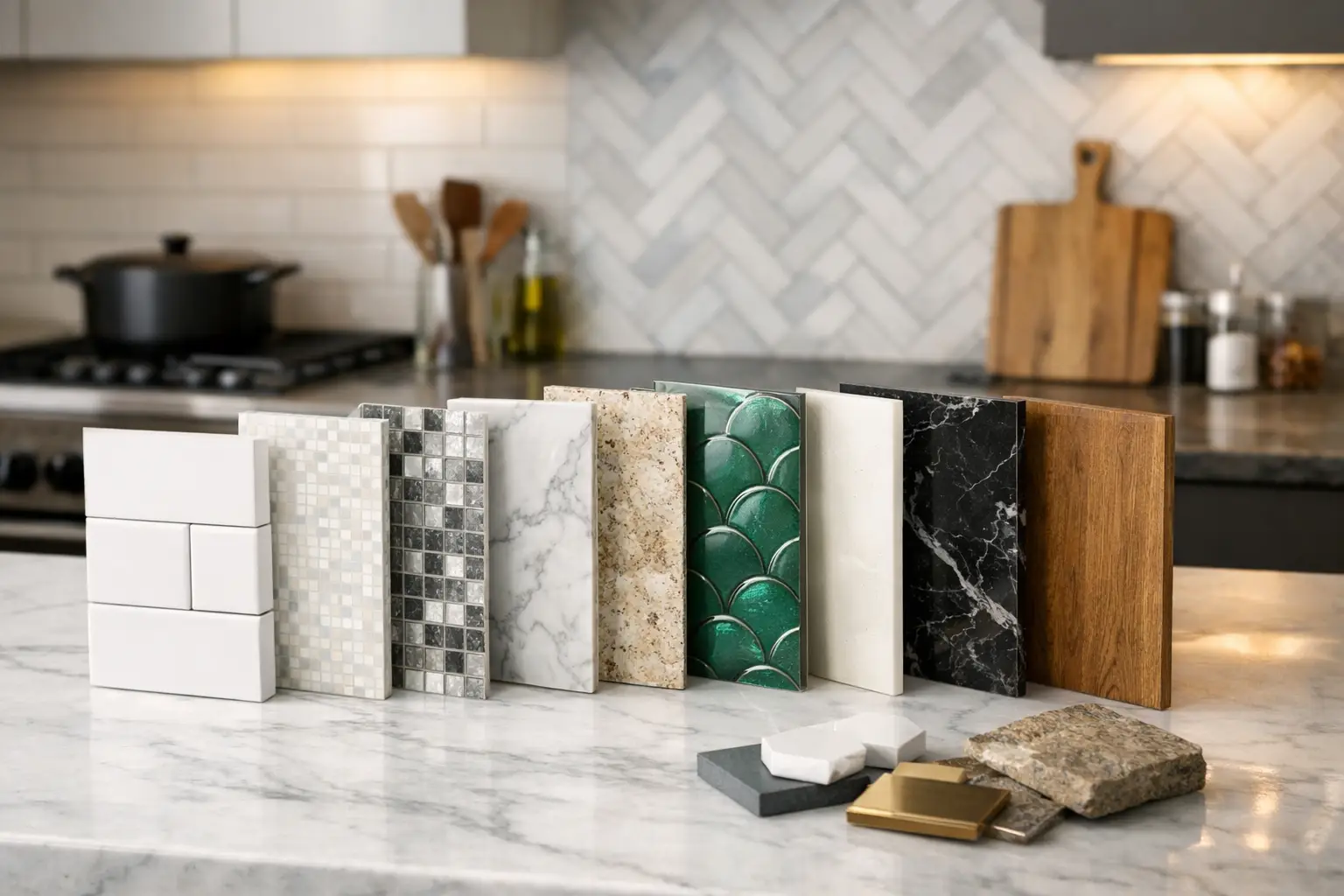
Ceramic tile is one of the most dependable choices for a reason. It is cost-effective, widely available, easy to clean, and flexible enough to fit almost any kitchen style. You can go simple with a classic subway tile or choose something with color and shape for more personality.
For many homeowners, ceramic lands in the sweet spot between price and performance. It handles normal kitchen mess well, and if a section is damaged, repairs are usually manageable. The trade-off is that lower-end ceramic can chip more easily than porcelain, and grout lines will need occasional attention.
If you want a backsplash that looks clean, performs well, and does not overcomplicate the project, ceramic is hard to beat.
Porcelain tile
Porcelain tile offers many of the same design advantages as ceramic, but it is denser and typically more durable. That makes it a strong option for busy households and kitchens with heavy cooking.
It also performs well in homes where long-term wear matters. Porcelain resists moisture and staining very well, and many products mimic natural stone without the same maintenance demands. The main drawback is cost. Material and installation can run higher, especially if you choose large-format tile or a specialty finish.
For homeowners who want a practical upgrade with strong staying power, porcelain is one of the best kitchen backsplash materials available.
Glass tile
Glass tile has a crisp, reflective look that can brighten a kitchen and make a smaller space feel more open. It works especially well where natural light is limited or where the goal is a cleaner, more polished appearance.
On the maintenance side, glass is nonporous and easy to wipe down. That is a big plus behind sinks and prep areas. But installation is less forgiving. The wall surface needs to be properly prepared; the choice of adhesive matters; and cuts can be trickier. Glass also tends to show smudges and grease more readily than some matte materials.
If you like a sharper, more contemporary finish and do not mind a little extra upkeep, glass can be a great fit.
Natural stone
Natural stone backsplashes bring warmth and character that manufactured products often cannot fully replicate. Travertine, marble, slate, and other stone options each have a distinct look, and no two pieces are exactly alike.
That uniqueness is the main appeal, but it comes with responsibility. Most natural stone requires sealing, and some varieties are more sensitive to stains, acids, and discoloration. Marble, for example, can be beautiful but is not always the best match for a heavy-use cooking zone if you want low maintenance.
Stone makes sense when appearance is the priority and you are comfortable with a little more care. It can also pair especially well with mountain homes and rustic-modern interiors in places like the Arkansas River Valley, where natural textures often feel right at home.
Quartz slab
A quartz slab backsplash creates a clean, continuous look with very few seams. Many homeowners choose it to match or complement their countertops, especially in kitchens where they want a more streamlined finish and less grout to clean.
This is one of the easiest surfaces to maintain. Because quartz is nonporous, it resists stains well and wipes down quickly. It also delivers a more upscale appearance than many tile options.
The downside is cost. Slab material and fabrication usually place quartz on the higher end of the backsplash price range. It is also a more committed design choice. If trends change or you want to refresh the kitchen later, replacing a full slab is a bigger project than swapping out tile.
Still, for low maintenance and a polished look, quartz is a strong contender.
Full-height countertop slab
Using the same material as the countertop for the backsplash, whether quartz, granite, or another slab product, has become increasingly popular. It reduces visual clutter and gives the kitchen a custom, built-in look.
This approach works especially well with dramatic countertop patterns that deserve more visibility. It also eliminates many of the cleaning issues that come with grout joints.
The trade-off is that it is not always the most budget-friendly option, and very bold slab patterns can overwhelm a smaller kitchen if not carefully balanced. It is a good example of a choice that looks simple but needs thoughtful planning.
Stainless steel
Stainless steel is not the first material many homeowners picture, but it is one of the most functional. It is heat- and moisture-resistant and very easy to sanitize. Behind a range, especially in kitchens with serious cooking habits, it performs extremely well.
The look is more industrial and modern, so it does not suit every home. It can also show fingerprints and scratches. But if performance is your top concern, stainless steel deserves more consideration than it usually gets.
It is especially useful in targeted areas. Some homeowners use tile for most of the kitchen and add stainless steel only behind the cooktop.
Peel-and-stick panels or tile
For a quick cosmetic update, peel-and-stick products can improve appearance without the cost of a full renovation. They can be useful in lower-impact kitchens, temporary situations, or budget-conscious property updates.
That said, they are not usually the best long-term solution. Heat, moisture, and cleaning can shorten their lifespan, and the finished look varies widely by product quality. For owner-occupied kitchens where durability matters, they are usually better viewed as a short-term fix than a true upgrade.
small issues that canBrick veneer or textured materials
Brick veneer and other textured backsplash materials can add a lot of personality. They work well in farmhouse, rustic, and industrial-inspired kitchens, helping make a space feel less generic.
The challenge is cleaning. Texture catches dust, grease, and cooking residue more easily than smooth surfaces. If the material is porous, maintenance gets even more demanding. These options can look great, but they are often better for accent walls than for the full high-splatter zone behind a range.
What material is best for most kitchens?
If you want the safest all-around answer, ceramic tile and porcelain tile are usually the strongest picks. They offer the best balance of cost, style flexibility, durability, and ease of repair. For homeowners who want a more upscale, low-maintenance finish and have room in the budget, quartz or a full-slab backsplash is often worth a closer look.
Natural stone can be excellent when character matters more than convenience. Glass works well when brightness and a cleaner visual style are the goal. Stainless steel is a smart specialty option where function leads the decision.
A few mistakes to avoid
The most common backsplash mistake is choosing based on a small sample without thinking about the whole kitchen. A tile that looks perfect in a showroom can fight with the countertop, cabinet tone, or lighting once it is installed.
Another issue is underestimating grout. Tiny mosaic patterns or heavily jointed layouts may look attractive, but they create more cleaning and maintenance than many homeowners want. That does not mean avoid them entirely. It just means make the decision with your eyes open.
It also helps to think about edges, outlets, windows, and transitions before work starts. Good backsplash work depends on planning, not just material selection. That is where an experienced installer helps prevent the kind of small issues that make a finished kitchen feel slightly off.
If you are weighing appearance, budget, and long-term upkeep all at once, the best decision is usually the one that fits how your kitchen is actually used, not just how it looks in photos. A backsplash should make your kitchen feel more finished, easier to maintain, and more enjoyable to live with every day. That is the kind of upgrade that keeps paying you back long after the project is done.
Aurthor:
Robby Bates