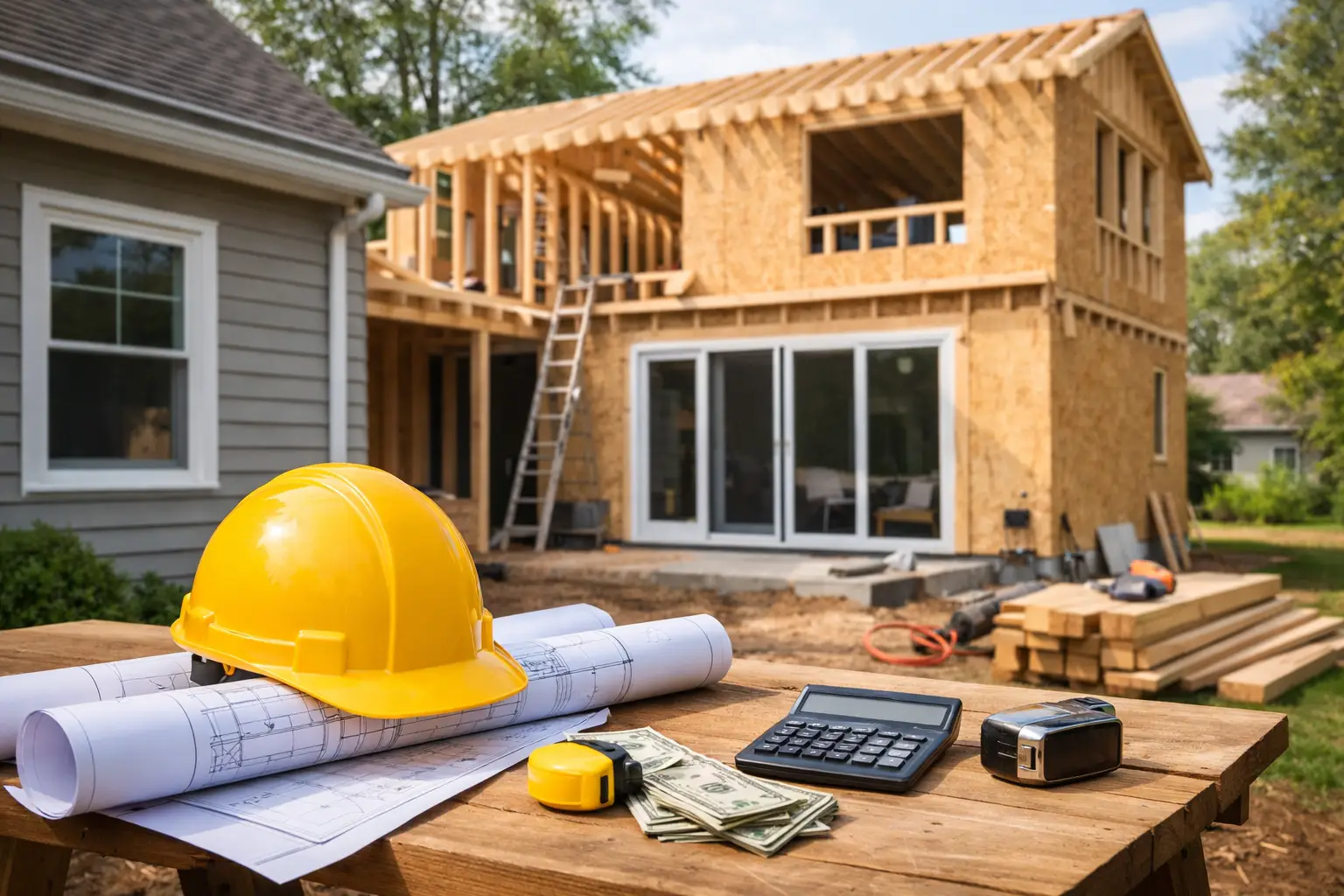
Sticker shock usually shows up fast with additions. A homeowner starts by considering an extra bedroom or a larger family room; the estimate then includes excavation, framing, roofing, electrical, insulation, permits, and finish work. That is why one of the first questions we hear is, " What does a home addition cost? The honest answer is that it depends on size, structure, access, finishes, and how well the new space ties into the existing home.
For homeowners in Salida and nearby mountain communities, there is another layer to consider. Site conditions, seasonal scheduling, utility access, and local labor all affect pricing. A straightforward addition can still become more involved if the lot is sloped, the existing home needs upgrades, or the project requires matching older materials. The goal is not just adding square footage. It is creating space that feels as if it has always been part of the home.
What does a home addition cost in real terms?
Most home additions are priced by square foot, but that number only tells part of the story. In many markets, a basic addition may start at $150 to $250 per square foot, while a more customized or higher-end addition can run $250 to $400 per square foot or more. In Colorado mountain areas, costs can trend higher depending on access, weather windows, and material logistics.
That means a 200-square-foot bump-out might cost far less than a 600-square-foot primary suite addition, but not always in a simple linear way. Smaller additions still incur fixed costs such as design work, permits, mobilization, and tying new systems into the house. A compact project can have a higher per-square-foot cost than a larger one for that reason.
The selection of finishes and shapes. As a rough example, a modest bedroom addition may fall in the $40,000 to $90,000 range. A larger living space or primary suite can push the price into the $80,000 to $180,000 range or more. If the addition includes a bathroom, custom windows, major structural work, or extensive exterior changes, the total rises quickly.
The biggest cost drivers homeowners should expect
The foundation is one of the first major variables. A simple slab-on-grade addition may cost less than a crawlspace or basement build. If excavation is difficult, drainage needs work, or the site has access limitations, labor and equipment costs go up before framing even begins.
Rooflines matter too. If the new addition can connect cleanly to the existing roof, the build is usually more efficient. If the design requires reworking large portions of the current roof or resolving drainage and snow-load concerns, the project becomes more complex. In a place like Salida, weather performance is not something to treat as an afterthought.
Mechanical systems can also change the budget in a hurry. If your electrical panel is already full, or your HVAC system cannot adequately serve the new square footage, those upgrades become part of the real project cost. Plumbing adds another layer. A room addition without plumbing is typically much simpler than adding a bathroom, laundry area, or guest suite.
Then there are the finishes. Flooring, trim, doors, lighting, cabinets, tile, and windows all affect the final number. Homeowners sometimes focus on structure and forget how much finish selections shape the budget. A practical, durable finish package can keep costs under control. High-end materials can dramatically increase the investment even when the footprint stays the same.
Different types of additions, different price ranges
Not all additions are built the same way, which is why broad online averages can be misleading. A bump-out that expands a kitchen or living room by a few feet is often one of the more affordable ways to gain function without creating a full standalone room. Even then, if walls are load-bearing or plumbing and electrical need rerouting, the cost can still be high.
A bedroom addition is often more predictable because it usually requires less plumbing and fewer specialty finishes. A bathroom addition tends to cost more per square foot because plumbing, waterproofing, ventilation, tile work, and fixtures add labor and material costs. A primary suite addition combines both worlds - more square footage plus plumbing and premium finishes - so it often sits on the higher end.
Garage conversions and over-garage additions are worth mentioning, as homeowners often assume they are budget-friendly options. Sometimes they are, but not always. Conversions may require insulation upgrades, structural reinforcement, new windows, new HVAC distribution, and code-related changes, making them more involved than expected.
What does a home addition cost when the existing house needs work?
This is where real-world budgeting gets more nuanced. Many older homes need improvements before or during an addition. That could mean bringing framing up to current standards, addressing outdated wiring, repairing hidden water damage, or improving insulation where the new and old portions connect.
These are not fluff add-ons. They are the kinds of items that protect the quality of the finished project and help avoid expensive issues later. If a contractor discovers a structural problem after demolition starts, the right move is to stop, clearly explain the issue, and agree on a fix before proceeding. That kind of communication matters just as much as the craftsmanship.
The same applies to exterior integration. Matching siding, roofing, paint, trim, and window styles can be straightforward on a newer home and more challenging on an older one. If exact materials are no longer available, homeowners may need to decide whether to blend, upgrade adjacent areas, or accept a visible difference between old and new.
Soft costs that belong in the budget
Construction is only part of the number. Design fees, engineering, permits, utility coordination, and inspections are all part of what a home addition really costs. Some projects also require surveys, soil considerations, or HOA review, depending on the property.
Temporary living inconvenience has a cost, too, even if it does not appear on a formal estimate. You may lose use of part of the home during construction. There may be noise, dust, limited access, or short-term utility interruptions. For rental property owners and property managers, project timing can affect occupancy and revenue.
A smart budget includes contingency money. Even with careful planning, additions involve opening up an existing structure, and surprises can happen. Setting aside 10 percent to 20 percent for unforeseen conditions is often a practical move, especially in older homes.
How to budget without guessing
The best starting point is not a random online calculator. It is a conversation about what you want the space to do, how long you plan to stay in the home, and what parts of the finish level really matter to you. A family adding needed living space will budget differently than an owner improving a second home or a landlord trying to increase rental value responsibly.
It helps to rank priorities early. If square footage matters most, you may keep finishes simpler. If the addition needs to feel like a high-end extension of the home, the budget should reflect that from the beginning. Trying to design one project and fund a cheaper version later usually leads to frustration and rework.
This is also where a thorough on-site consultation pays off. Seeing the lot, the existing structure, the access points, and the finish expectations gives a contractor the context needed to provide a more reliable estimate. That is far better than an overly optimistic ballpark number that changes once real conditions are known.
For homeowners who want a dependable process, Salida Home Services approaches projects with a clear scope discussion and upfront pricing that helps reduce surprises. That matters in addition, where little details can become expensive if they are not addressed early.
The cheapest addition is not always the best value
Cost matters, and it should. But the lowest bid is not automatically the smartest one. If an estimate is missing structural details, finish assumptions, permit planning, or system upgrades, the price may look attractive only because the full scope has not yet been accounted for.
A well-built addition should feel integrated, perform well through the seasons, and hold up over time. That means proper foundation work, weather protection, insulation, air sealing, and finish quality. It also means good communication when conditions change. Homeowners and property managers usually do best with a contractor who explains trade-offs clearly and treats scope changes like a discussion, not a surprise.
If you are planning extra space, the right question is not only what a home addition costs. It is also what kind of addition makes sense for your home, your property, and your long-term plans. Start there, build t
considering an extra bedroom or a larger family room the estimate then
Aurthor:
Robby Bates