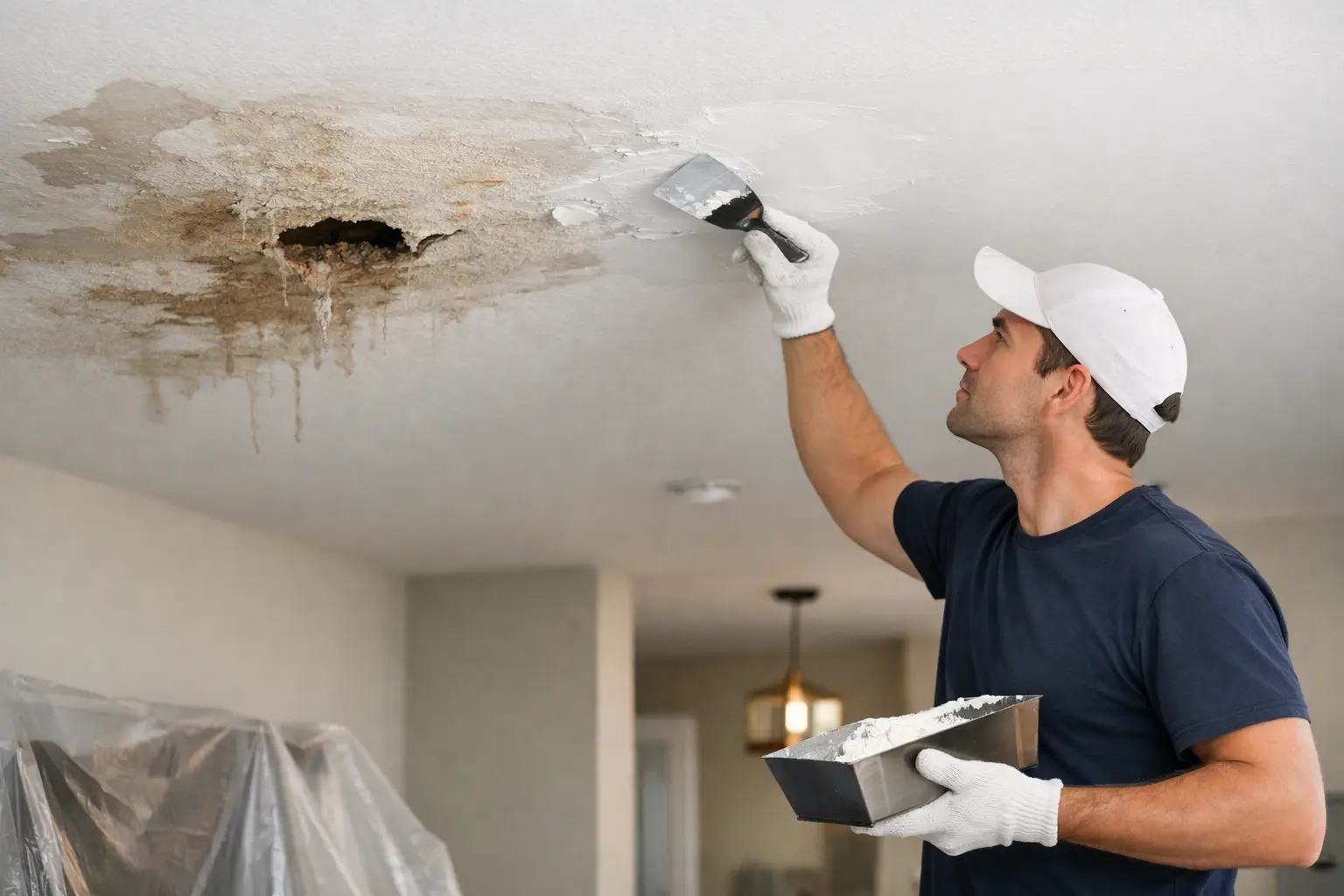
A brown ceiling stain rarely stays just a stain for long. What starts as a small ring over a bathroom, bedroom, or hallway can turn into soft drywall, peeling texture, mold growth, or even a partial ceiling collapse if the source keeps feeding it. Good ceiling water damage repair is not just about patching the spot you can see. It starts with finding the cause, understanding how far the moisture traveled, and rebuilding the ceiling so it looks right and stays sound.
That matters because water almost never behaves neatly. It can run along framing, collect above insulation, and show up several feet away from the actual leak. Homeowners and property managers often see the visible damage first, but the real job is solving both problems - the water source and the damaged materials.
What causes ceiling water damage in the first place?
In most homes, ceiling water damage comes from one of a few common sources. Roof leaks are a major one, especially after storms, ice buildup, or aging shingles start letting water in. Plumbing leaks are another frequent cause, particularly from bathrooms above, supply lines, drain lines, tubs, showers, and water heater connections. HVAC systems can also create trouble when a condensate line clogs or an attic unit leaks slowly over time.
Sometimes the issue is obvious. A burst pipe or active drip leaves little mystery. Other times it is slower and easier to miss. A tiny roof penetration leak or a loose toilet seal upstairs can keep feeding moisture into the same section of ceiling for weeks before anyone notices more than a faint discoloration.
The source matters because the repair approach changes with it. Clean water from a fresh plumbing leak is one thing. Long-term roof intrusion with wet insulation, stained framing, and repeated saturation is a different level of repair. If the water involved is contaminated, such as from a drain backup, the damaged materials usually need more aggressive removal and replacement.
When ceiling water damage repair is more than a cosmetic fix
It is tempting to think of ceiling damage as a drywall problem. Sometimes it is. But often the ceiling is just the visible layer that finally gave away the larger issue above it.
If drywall is sagging, bubbling, crumbling, or soft to the touch, the material has likely lost its strength. Joint tape can loosen. Texture can separate. Paint can blister. Insulation above the ceiling may be soaked and no longer doing its job. Wood framing may still be structurally sound, but it needs to be checked rather than assumed.
This is where a careful, hands-on approach matters. A proper repair means opening what needs to be opened, letting materials dry, replacing anything that cannot be trusted, and finishing the ceiling so it blends back into the room. Going straight to stain blocker and paint may hide the mark for a little while, but it does not fix a wet cavity or a weakened ceiling panel.
Signs you should act quickly
Water damage to ceilings: Some ceiling problems can wait a few days for scheduling. Others should be addressed right away. If the ceiling is actively dripping, bowing downward, or spreading rapidly, treat it as urgent. Water adds weight fast, and drywall does not need much encouragement to fail.
You should also move quickly if you notice a musty odor, dark growth, or damage near light fixtures and fans. Moisture and electricity are a bad combination, and hidden mold becomes harder to deal with the longer it goes unchecked. In occupied homes and rentals, a fast response also helps limit disruption and prevent a small repair from becoming a much bigger one.
The right order of ceiling water damage repair
The first step is stopping the source. Without that, every other repair is temporary. That may mean a roof repair, plumbing fix, appliance line replacement, or HVAC service before ceiling work begins.
Next comes evaluation and drying. Depending on the amount of water involved, the contractor may need to remove a damaged section of ceiling to inspect the cavity, allow airflow, and check insulation and framing. Not every stain requires a large tear-out, but not every stain is harmless either. This is one of those areas where it depends on the leak's age, size, and severity.
Once the area is dry and stable, damaged materials are removed and replaced. That can include drywall, joint tape, corner details, insulation, and sometimes trim. After that, the ceiling is finished with mud work, sanding, texture matching if needed, primer, and paint.
Texture matching is often the part homeowners underestimate. A patch can be structurally solid and still stand out badly if the finish does not blend. Flat ceilings are usually simpler to repair cleanly. Heavy texture, custom hand-troweled finishes, and older patched surfaces take more care. A good result is not just dry and safe. It should also look like the damage never happened.
Repair or replace the whole ceiling?
This depends on how widespread the damage is. A small, isolated leak may only require a localized drywall patch and refinishing in one section. If the water spread across seams, affected multiple areas, or left the ceiling with uneven texture and multiple stains, broader replacement can make more sense.
There is a trade-off here. A small repair costs less upfront, but if the surrounding ceiling is already fragile or mismatched from previous work, patching a single spot may not yield the cleanest long-term result. A larger replacement costs more, yet it can produce a better finish and reduce the chance of future cracking around old weak points.
For property managers, this decision often comes down to durability and appearance. In a high-turnover rental, a more complete repair can reduce callbacks. In a primary residence, homeowners may care more about having a seamless finished ceiling in a main living area. Neither choice is automatically right. The best option is the one that fits the ceiling condition, the budget, and the expectations for the final look.
What homeowners should not do
Prioritize a seamless finished ceiling in the main living area. A few common mistakes make ceiling repairs harder than they need to be. One is painting over a stain before the leak is fixed and the area is dry. Another is leaving wet drywall in place too long because the stain seems small. Water can spread farther than the visible mark suggests.
It is also risky to poke or cut into a wet ceiling without thinking through what may be above it. There could be pooled water, electrical wiring, insulation, or plumbing lines. If the ceiling is bulging, it needs to be handled carefully. And if the damage involves contaminated water, DIY cleanup is usually not worth the health risk.
Why communication matters during the repair
One reason water damage in the ceiling feels stressful is that the visible problem is only part of the story. Once the ceiling is opened, the actual scope can change. Wet insulation may need to come out. Framing may need extra drying time. A simple patch may turn into a broader repair.
That is why clear communication matters as much as craftsmanship. Homeowners deserve to know what was found, what needs to be done now, and what can wait. Property managers need realistic timelines and straightforward pricing so they can plan around tenants, turnovers, or occupied spaces. No one likes repair surprises, especially when water is involved.
This is where working with a dependable local contractor helps. At Salida Home Services, the goal is to handle the repair process with the same care we would want in our own homes - clear scope, honest recommendations, solid workmanship, and respect for the space while the work gets done.
Preventing the next ceiling problem
The best ceiling water damage repair is the one you do once. That usually means paying attention to the systems above the ceiling, not just the ceiling itself.
Roof inspections after major weather, checking attic ventilation, maintaining caulk and grout in upstairs bathrooms, watching for plumbing drips, and servicing HVAC condensate lines can all help. In second homes and rentals, routine check-ins matter even more because small leaks can go unnoticed for longer stretches.
If you have had one ceiling leak before, it is worth keeping an eye on that area through the next season. A repaired ceiling should stay dry, stable, and clean-looking. If stains come back, that is a sign the source was not fully resolved.
A damaged ceiling can make the whole room feel unsettled, but the fix does not have to be complicated when it is handled in the right order. Start with the source, repair what water actually damaged, and do the finish work carefully enough that you can stop thinking about it every time you look up.
Aurthor:
Robby Bates