A bathroom can look dated, sure, but the layout is usually the real reason it feels frustrating. If you are searching for bathroom layout remodel examples, you are probably not just choosing tile or paint - you are trying to fix a room that wastes space, crowds the door swing, skimps on storage, or makes daily routines harder than they should be.
The right layout change can make a small bathroom feel easier to use without adding square footage. In other homes, especially older ones, a better layout is what finally makes room for a larger shower, double vanity, or more practical linen storage. The key is choosing a layout that matches how the bathroom is actually used, not just what looks good in a photo.
Bathroom layout remodel examples that solve real problems
The best remodels usually start with one clear issue. Maybe two people need to get ready at once. Maybe a tub sits unused while the shower feels cramped. Maybe a rental property needs a durable setup that is easier to clean and maintain. These examples show how layout changes can improve function without making the project bigger than it needs to be.
1. Hall bathroom with a tub-to-shower swap
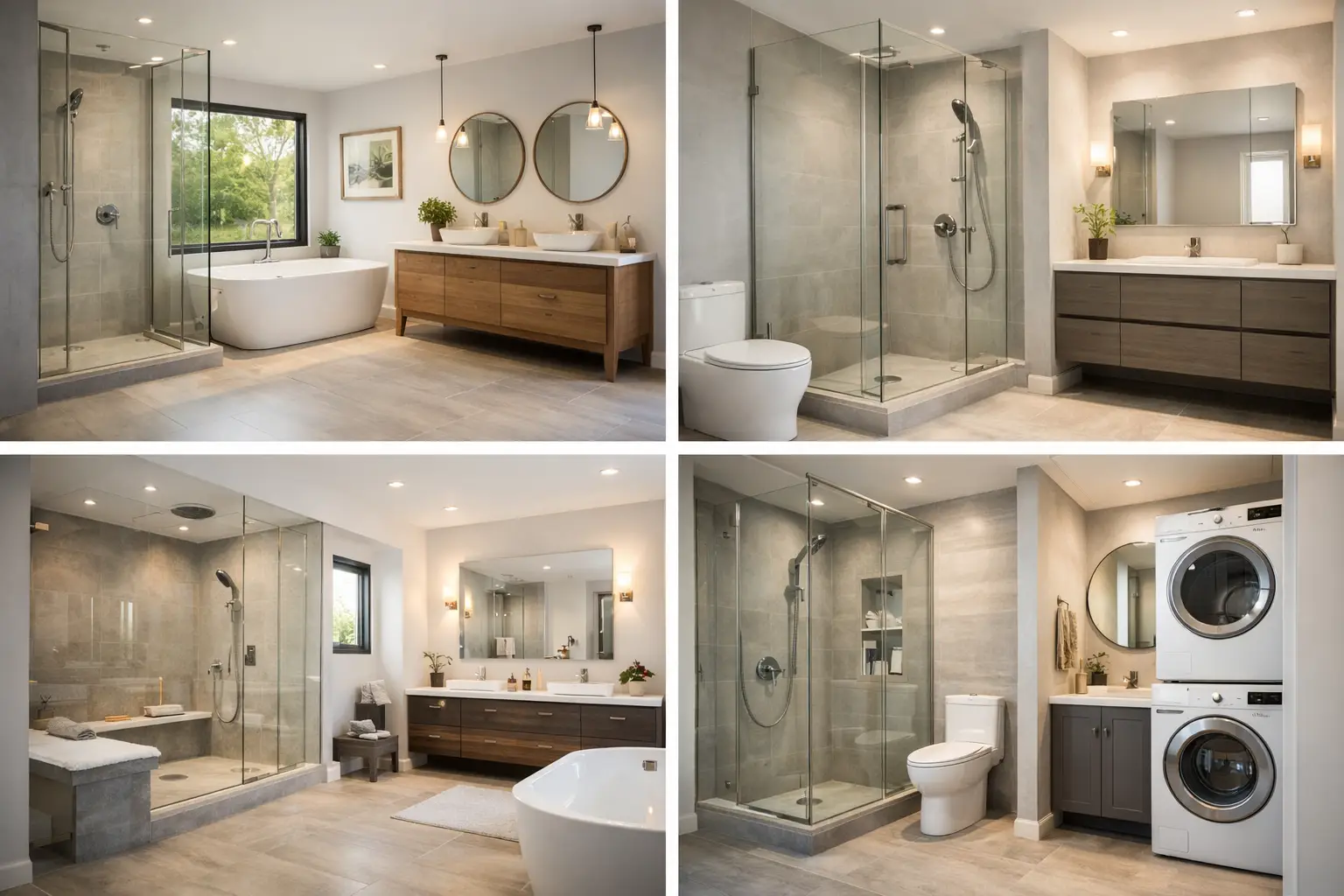
This is one of the most common remodel paths. In many hall baths, a standard tub takes up one long wall, the vanity sits opposite, and the toilet is tucked at the end. If the tub rarely gets used, replacing it with a walk-in shower can open the room visually and make daily use more comfortable.
This works especially well for homeowners who want easier access and less stepping over a tub edge. The trade-off is resale balance. If it is the only tub in the home, some buyers may still want one for children or guests. In that case, it depends on whether you are remodeling for long-term livability or future broad-market appeal.
2. Primary bathroom with a bigger shower and smaller tub
A lot of older primary baths devote too much room to a large corner tub and not enough to the shower. One smart update is to scale back the tub or remove it entirely, and use the resulting footprint for a larger shower, better vanity spacing, or more storage.
This layout feels more current because it reflects how many people actually use the room. A soaking tub can still be worth keeping if you use it regularly, but if it has become a place to collect dust, square footage may be better spent elsewhere. Good remodel planning means being honest about that.
3. Small bathroom with the vanity moved off the door wall
In compact bathrooms, the first thing you notice is often what the door hits or blocks. Moving the vanity away from the entry wall can improve the room's feel more than any cosmetic update ever will. Sometimes that means relocating the sink to a side wall and placing a narrow vanity where it does not interfere with circulation.
This kind of change is simple in concept but not always simple in execution. Plumbing location matters, and not every wall cavity gives you the room you need. Still, when it works, it can make a tight bathroom feel calmer and easier to use.
4. Jack-and-Jill bathroom with separated sink zones
For shared bathrooms between bedrooms, splitting the sink area from the toilet and tub or shower area can make a big difference. Two users can get ready at once without giving up privacy. This is a strong layout for busy households and can also help in vacation homes where multiple guests share one bath.
The challenge is space. You need enough width to make separate zones functional rather than cramped. When the room is too small, the better solution may be a single vanity with stronger storage and improved traffic flow, rather than forcing a split that does not work well.
5. Narrow bathroom with a linear layout
Long, narrow bathrooms often benefit from keeping fixtures lined up on one side or arranged in a straight path from the door. That can reduce awkward turns and make the room easier to navigate. A floating vanity, a glass shower enclosure, and consistent flooring can help the space feel less boxed in.
This is one of those bathroom layout remodel examples where less movement is often better. If you start placing fixtures on both sides of a narrow room without enough clearance, it quickly feels crowded. Keeping the path simple usually yields better results.
6. Powder room upgraded for better function
A powder room may be small, but layout still matters. Swapping a bulky vanity for a pedestal sink or compact wall-mounted sink can free up floor space and make the room feel cleaner. Reversing the door swing or installing a pocket door can also solve a surprising amount of congestion.
The main limitation here is storage. A pedestal sink looks open and tidy, but you give up cabinet space. If this bathroom serves guests only, that may be fine. If it also supports day-to-day use, a small vanity with smart drawer storage may be the better call.
7. Guest bath converted to a more accessible layout
A remodel does not have to be a full accessibility retrofit to be a meaningful improvement. Widening the entry clearance, removing a high tub threshold, adding a curbless or low-threshold shower, and increasing the open floor area can make the bathroom safer and more comfortable for a wider range of users.
This kind of planning matters for aging in place, but it also helps with guest comfort and long-term practicality. The biggest factor is often whether the floor structure and drainage can support the shower design you want. That is where early planning saves time and budget.
8. Bathroom and laundry rework for better use of square footage
In some homes, the best change in bathroom layout comes from looking beyond the bathroom walls. A nearby closet, an underused hallway nook, or a poorly arranged laundry area may offer enough space to improve the bathroom without adding to the house. That extra space can allow for a larger vanity, better storage, or a more comfortable shower layout.
This option has real upside, especially in older homes with awkward room divisions. It also adds complexity because you are now dealing with multiple spaces, not just one. When done well, though, it can feel like the home suddenly makes more sense.
What to look at before choosing a new bathroom layout
A layout that looks great on paper can still become expensive fast if it ignores plumbing, structural limits, or door clearance. Before settling on a design, think through what can stay and what truly needs to move.
Keeping the toilet in roughly the same location often helps control cost. Moving it is possible, but waste line changes are usually more involved than shifting a vanity a few feet. Showers and tubs also depend on the drain location, framing, and waterproofing details, all of which should be handled correctly from the start.
Storage deserves more attention than most people give it. Homeowners often focus on the larger shower or vanity, then realize later that there is nowhere for towels, backups, or everyday items. A better layout is not just about open floor space. It is about making the room work every morning and every evening.
Door swings are another detail that gets overlooked. A standard hinged door can eat up usable space in a small bathroom. In the right setup, reversing the swing or switching to a pocket door can improve function immediately. It is not always possible, but it is worth discussing early.
How to decide which bathroom layout remodel examples fit your home
The best choice usually comes down to three questions. Who uses the bathroom most, what frustrates them now, and what changes will still make sense five years from today?
If this is the main family bathroom, versatility matters. If it is a primary bath, comfort and routine may matter more. If it is a rental or investment property, durability, ease of cleaning, and broad usability usually carry more weight than highly customized features.
It also helps to separate wants from layout priorities. Heated floors and upgraded finishes are nice additions, but they will not fix a bathroom that feels cramped or awkward. Start with the function first. Then build the finish choices around a plan that already works.
For many homeowners, the most helpful step is talking through options with a contractor who can explain what is realistic in the existing space. That kind of conversation often narrows the decision quickly. A good remodel should feel clear before construction starts, with pricing, scope, and expected trade-offs spelled out upfront.
If you are considering a bathroom update in the Arkansas River Valley, it is worth taking the time to compare a few layout directions before locking into finishes. The right plan is usually the one that makes the room easier to live with every day, not the one that simply looks biggest on a sketch.
A well-planned bathroom does not need to be flashy to feel like a major improvement. When the door clears properly, the shower fits the way it should, and storage is where you actually need it, the whole room starts doing its job better.
Aurthor:
Robby Bates