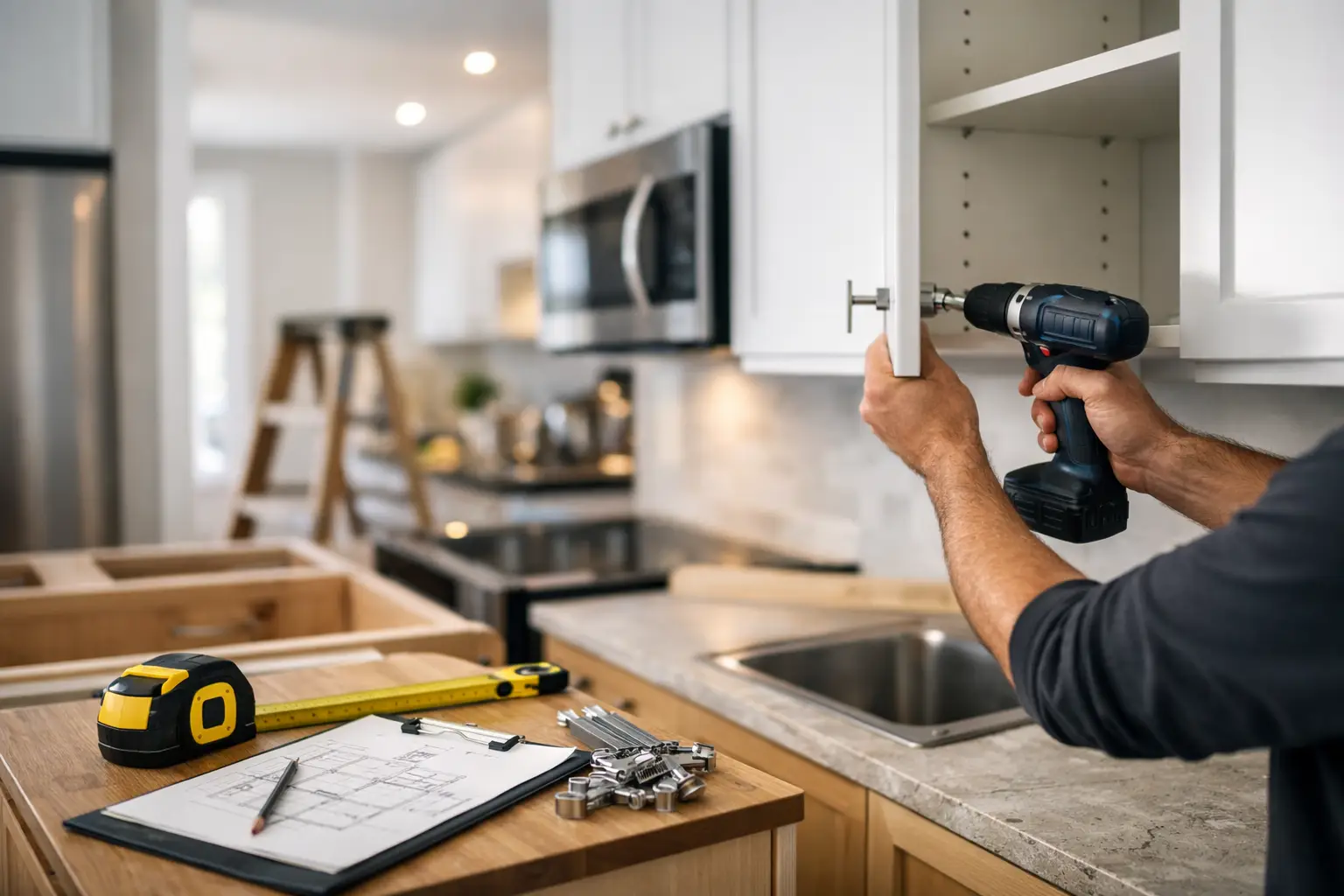
If you have ever priced out a kitchen update and felt like the numbers moved every time you asked a question, you are not imagining it. Cabinet installation cost can vary quite a bit, even between projects that look similar at first glance. The difference usually comes down to the details - cabinet type, layout, wall condition, trim work, and how much adjustment is needed to make everything fit and function the way it should.
That is why the most useful answer is not a one-size-fits-all number. Homeowners and property managers need a realistic picture of what drives cost, where the trade-offs are, and how to avoid paying for surprises that could have been addressed earlier.
What affects cabinet installation cost?
Labor is the biggest piece people underestimate. Installing cabinets is not just a matter of hanging boxes on a wall. The installer has to check level and plumb, locate studs, work around uneven floors and walls, align doors and drawers, and ensure appliances, countertops, and trim have the clearances they need.
In a newer home with straight walls and a simple layout, installation tends to move faster. In an older home, or any home with settled framing, the work can take longer because getting cabinets to look and work right requires shimming, scribing, and careful adjustment.
Cabinet style also matters. Stock cabinets are generally quicker to install because they come in standard sizes and simpler configurations. Semi-custom and custom cabinets often cost more to install because they involve more planning, more detailed fitting, and sometimes more finish work on site.
Then there is scope. A straightforward replacement of cabinets in the same footprint is usually more affordable than reworking the kitchen layout. If you are moving plumbing, changing appliance locations, adding an island, or opening walls, the installation cost becomes part of a larger remodeling budget rather than a stand-alone line item.
Typical cabinet installation cost ranges
For labor only, many homeowners will see cabinet installation cost fall somewhere between a few hundred dollars per cabinet run and several thousand dollars for a full kitchen, depending on complexity. A small, simple job might land around $2,000 to $4,000 for installation labor. A more involved kitchen can run $5,000 to $10,000 or more, especially when the layout is large, the cabinets are heavy or custom, or the home needs corrective work before cabinets can be set.
If you are looking at total project cost, including the cabinets themselves, the range gets much wider. Basic stock cabinet projects may start around the lower five figures for a small kitchen, while semi-custom and custom kitchens can climb well beyond that. For most homeowners, the smartest move is to separate the cost of the cabinet from installation labor so you can compare bids more clearly.
Bathrooms, laundry rooms, mudrooms, and built-in storage projects usually cost less than a full kitchen, but the same pricing logic applies. A small vanity install is a very different job from a wall of tall storage cabinets with custom trim and panels.
Why kitchen layout changes increase the price
A lot of budget drift happens when people confuse cabinet replacement with kitchen reconfiguration. If cabinets are going back in the same spots, the installer can focus on fit, fastening, alignment, and finish details. Once the layout changes, you may also be paying for demolition, wall repair, electrical changes, plumbing adjustments, flooring patching, and coordination with countertop templating.
That does not mean layout changes are a bad idea. Sometimes a better layout dramatically improves storage, function, and resale appeal. It just means the cabinet installation cost is no longer the whole story, and the total investment should be discussed as a complete project.
The hidden factors that change labor cost
Two kitchens can have the same cabinet count and still cost very different amounts to install. One reason is site condition. If the walls are wavy, the corners are out of square, or the floors slope noticeably, the installer has to spend more time ensuring the finished result looks clean.
Access also matters. A ground-floor kitchen with easy entry is simpler than carrying large cabinets up tight stairs or maneuvering through a finished home that needs extra protection. Occupied homes often require a slower, more careful process, especially when the kitchen must remain partially usable during part of the project.
Finish details add time too. Crown molding, light rail, decorative end panels, filler strips, toe-kick trim, appliance panels, and hardware installation all affect labor. None of these items are unusual, but they should be accounted for up front so the estimate reflects the real job.
Stock, semi-custom, or custom?
If your main goal is cost control, stock cabinets usually offer the lowest entry point. They work well when the room dimensions fit standard sizing, and your design priorities are straightforward. Installation is often more predictable because the cabinet system is simpler.
Semi-custom cabinets cost more, but they can address common layout problems with better sizing and finish options. For many homeowners, this is the middle ground that balances budget and function.
Custom cabinets are the best fit when you want exact dimensions, a specific style, or built-ins tailored to the space. The trade-off is price. Not only do the cabinets cost more, but installation can require a more exacting process to achieve the intended look.
None of these options is universally right. It depends on how long you plan to stay in the home, how important storage performance is, and whether the rest of the room supports the investment.
How to compare estimates without getting lost
The most helpful estimate is the one that clearly explains what is included. Look for specifics on demolition, disposal, cabinet assembly if needed, installation labor, hardware installation, trim, touch-up work, and any preparation needed for walls or floors.
If one price is much lower than the others, it is worth asking what has been excluded. Sometimes a lower number simply means fewer services are covered. That can lead to change orders later, which is exactly what most homeowners are trying to avoid.
A dependable contractor should also talk through what happens if the project uncovers something unexpected, such as wall damage, electrical conflicts, or framing issues. Clear communication on scope changes matters just as much as the starting number.
Where it makes sense to spend more
There are places where cutting corners tends to show up quickly. Good installation matters because even quality cabinets can look cheap if they are misaligned or poorly finished. Doors that do not hang evenly, drawers that bind, and trim that does not meet cleanly are usually installation issues, not cabinet issues.
It can also be worth paying more for better planning. Taking time to confirm measurements, appliance specs, and layout details before installation starts is far less expensive than correcting mistakes after cabinets are in place.
For rental properties and second homes, durability often deserves more weight than trend-driven design. A practical cabinet package installed correctly usually delivers better long-term value than a flashier option that is more delicate or harder to maintain.
How to keep cabinet installation cost under control
The best way to manage cost is to keep the project focused. Reusing the existing layout, choosing standard cabinet sizes where possible, and finalizing appliance selections early can all help reduce labor time and coordination issues.
It also helps to address related repairs before cabinets arrive. If the walls need patching or the subfloor has soft spots, handling those issues as part of the plan is usually smoother than discovering them mid-install.
For homeowners in the Arkansas River Valley, this is where working with a contractor who handles broader home improvement work can make life easier. Cabinet installation often touches drywall, trim, flooring, and minor utility adjustments. Having one reliable team manage the details can reduce delays and finger-pointing.
When a higher price is actually the safer choice
Not every higher estimate is overpriced. Sometimes it reflects a more complete scope, better jobsite protection, stronger communication, or a realistic allowance for the conditions in your home. If the contractor takes time to explain the work, asks careful questions, and accounts for likely challenges, that is usually a good sign.
On the other hand, vague pricing can be expensive even w, even when the number looks attractive at first glanceen the number looks attractive at first. Homeowners are usually better served by clear expectations than by a low starting bid that grows once the work begins.
Cabinets are one of the most visible and most used parts of a kitchen, bath, or storage area. When they are installed well, the whole room feels more finished, more functional, and easier to live with every day. If you are budgeting for a project, the goal is not just to find the lowest cabinet installation cost. It is to understand what you are paying for, choose the right scope for your home, and work with someone who will be straight with you from the first conversation to the final adjustment.
require more planning, more detailed fitting, and sometimes more on-site finish work
Aurthor:
Robby Bates