A lot of bathroom trends look great for six months and start feeling dated by the time the grout haze is gone. That is why bathroom design trends 2026 are leaning in a better direction - less showroom drama, more comfort, durability, and smart everyday function.
For homeowners, second-home owners, and property managers, that shift matters. A bathroom remodel is not just about getting a prettier space. It needs to withstand moisture, daily traffic, cleaning, and changing needs over time. The best design choices this year are the ones that improve how the room works without boxing you into a style that will feel tired too fast.
What bathroom design trends 2026 are really about
The biggest change is not one color or one fixture. It is the mindset behind the room. Bathrooms are being designed to feel calmer, easier to maintain, and more custom to the people using them.
That means fewer flashy features added just for resale photos and more attention on layout, storage, lighting, and materials that age well. Homeowners are asking smarter questions. Will this tile be hard to keep clean? Will this vanity give us enough storage? Will the shower still work for us in ten years? Those are the questions shaping better remodels.
This is also where trend and practicality need to meet. A floating vanity may look lighter and more modern, but in some homes, a furniture-style vanity with deeper drawers makes more sense. A curbless shower can look clean and high-end, but it needs proper planning for drainage and waterproofing. Good design is not about copying a photo. It is about matching the room to the house and the people living in it.
Warm, grounded finishes are replacing cold minimalism
The all-white bathroom is not gone, but it is no longer the default. In its place, bathroom design trends 2026 are bringing in more warmth through color, texture, and finish selection.
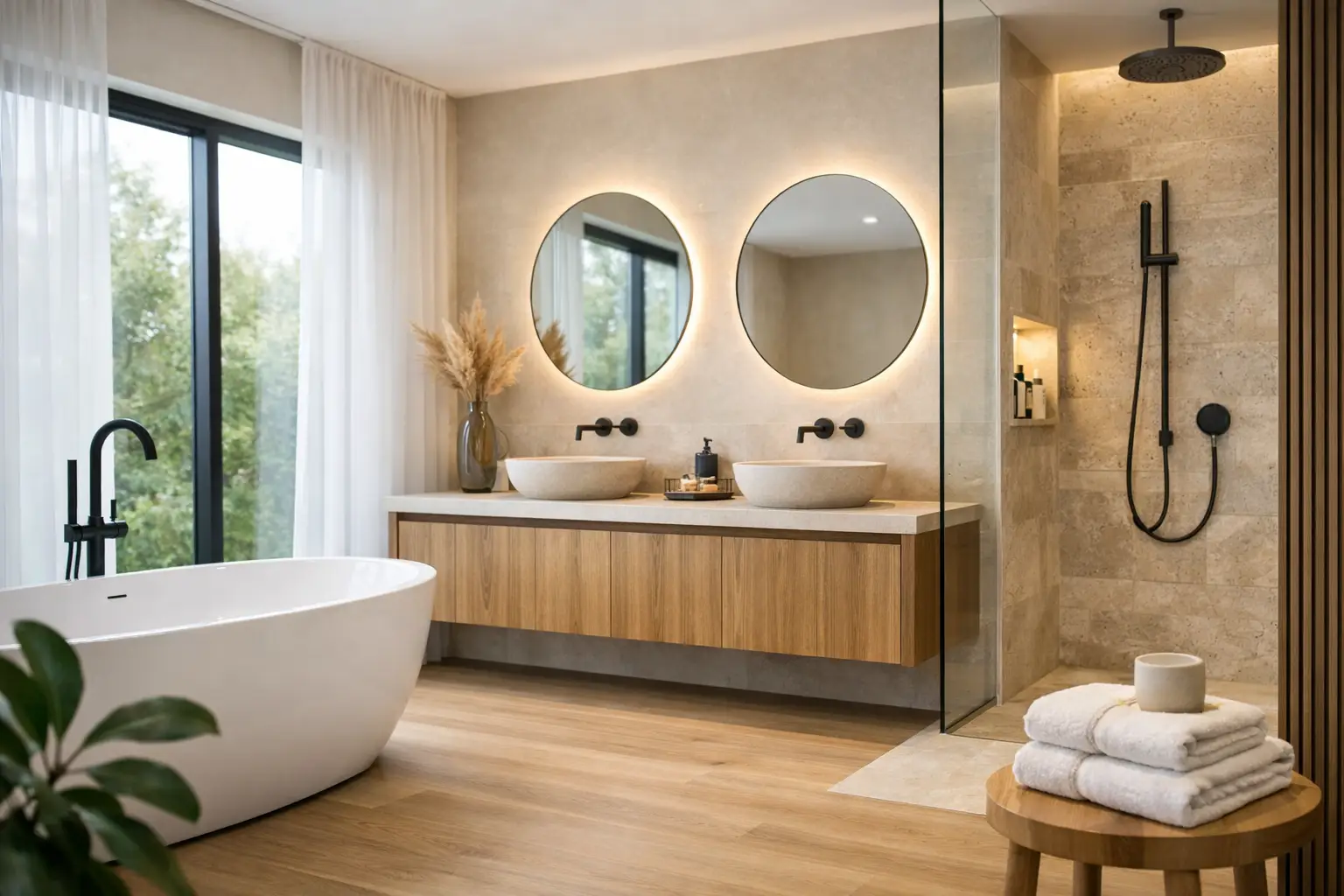
Wood tones are showing up in vanities, shelving, and trim details. Not orange-toned woods, but softer oak, walnut-inspired finishes, and medium natural stains that make the room feel lived-in. These pair well with warmer whites, greige, muted clay tones, and soft green or blue-gray walls. The result feels cleaner than rustic and less stark than the cool gray palette that dominated for years.
Metal finishes are shifting too. Brushed nickel still works because it is forgiving and easy to coordinate, but matte black is being used more selectively now. Homeowners are mixing in warmer options like brushed brass or champagne bronze, especially when they want the room to feel more inviting. The trade-off is that trend-forward metals can date faster, so if long-term flexibility matters most, a quieter finish may be the safer call.
,Showers keep getting bigger, but smarter matters more than larger
Walk-in showers are still high on the list, and for good reason. They make a bathroom feel more open and can improve daily use when planned correctly. But in 2026, the better trend is not simply making the shower bigger. It is making it work better.
That starts with thoughtful details like recessed niches, built-in benches, handheld sprayers, and glass layouts that reduce visual clutter without creating cleaning headaches. Large-format tile is also popular because it cuts down on grout lines and gives the space a cleaner look. Less grout often means easier maintenance, which is a real benefit in a busy household or rental property.
Curbless entries continue to grow in popularity, especially for homeowners planning to age in place. They offer a clean appearance and better accessibility, but they are not a plug-and-play upgrade. Floor slope, waterproofing, and room dimensions all have to be right. In a remodel, that may mean more structural work than expected. It is a great feature when the room supports it, but not every bathroom is the right candidate.
Vanities are doing more of the heavy lifting
Vanities are no longer just a sink base with doors that slam shut. They are becoming one of the hardest-working pieces in the room.
In practical terms, that means deeper drawers, better internal organizers, and layouts built around real routines. Double vanities are still popular in primary bathrooms, but homeowners are also realizing that one well-designed vanity can be more useful than two cramped sink stations. If counter space and storage are limited, a single sink with larger drawers often wins.
Furniture-style vanities with legs still have appeal, especially if you want the room to feel lighter. But fully built-in vanities remain the stronger choice for maximizing storage and simplifying cleaning around the base. This is one of those it-depends decisions. If the bathroom is small, every inch matters. If the room is larger and style is a higher priority, a furniture look can work well.
Tile is getting quieter and more textural
Statement tile has not disappeared, but the bolder patterns are being used with more restraint. Instead of covering every wall with a strong print, many remodels now use texture, variation, and scale to add interest without overwhelming the room.
Zellige-look tile, handmade-style finishes, fluted textures, and natural stone visuals are all part of this move. They give the space personality while still keeping it calm. On floors, porcelain that mimics stone remains a strong choice because it offers durability and easier upkeep than many natural materials.
This is especially important in homes that see regular use, guests, or rental turnover. Beautiful tile matters, but so does slip resistance, grout color, and how the surface hides water spots or soap residue. A tile wall that looks great in a photo may become a maintenance headache if the texture catches grime in all the wrong places.
Lighting is becoming part of the plan, not an afterthought
One of the most common problems in older bathrooms is poor lighting. A single overhead fixture rarely does enough, and it often creates harsh shadows right where you do the most daily tasks.
Newer bathroom design trends 2026 treat lighting as part of the design from the start. That includes layered lighting around the vanity, better overhead illumination, and accent lighting where it improves comfort. Backlit mirrors are popular, but side-mounted sconces or vertical fixtures still do a better job for many grooming tasks because they light the face more evenly.
Dimmer switches are also getting more attention, and for good reason. Bright light is useful in the morning, but softer light at night makes the room feel less clinical. It is a small upgrade that changes the experience of the space every day.
Storage is being built in earlier
A bathroom can have expensive finishes and still feel frustrating if there is nowhere to put anything. That is why one of the best trends is not visual at all. It is better storage planning.
Recessed medicine cabinets, tall linen towers, drawer dividers, shower niches, and toe-kick drawers are all examples of storage being integrated rather than added later. Even in small bathrooms, a few smart choices can reduce clutter and make the room feel larger.
For property managers, this matters even more. Bathrooms that are easy to use and easy to keep organized tend to wear better. Tenants and guests are more likely to treat the space well when it functions properly from the start.
Sustainability is showing up in practical ways
Not every homeowner wants a bathroom built around eco messaging, but most people do care about lower maintenance costs and efficient performance. That is where this trend has become more useful and less preachy.
Water-saving toilets, efficient shower fixtures, LED lighting, and durable surfaces all support a bathroom that costs less to operate and maintain. The key is to choose products that still perform well. A low-flow fixture that feels weak every day is not a win. Better products now make it easier to save water without sacrificing comfort.
Natural materials and low-VOC products are also getting more attention, especially in households focused on indoor air quality. These choices can be worthwhile, but they need to fit the budget and the demands of the room. Some premium materials are beautiful but require more maintenance than most families want.
The best bathrooms in 2026 feel personal, not generic
The strongest remodels this year are not the ones chasing every trend at once. They are the ones making smart, lasting choices based on how the bathroom is actually used.
That may mean a warmer palette, better lighting, and a larger shower. It may also mean keeping the footprint mostly the same and spending more on waterproofing, storage, and finishes that will still look good years from now. A good contractor will help sort out which upgrades are worth it and which ones only sound good on paper.
For homeowners in places like the Arkansas River Valley, where homes vary widely in age, layout, and style, that practical approach matters. The right bathroom should fit the house, hold up to daily life, and feel like an improvement every time you walk into it.
If you are planning a bathroom update, the best place to start is not with a trend board. Start with the problems you want the room to solve, then build a design that looks good while doing its job well.
a single color or
Aurthor:
Robby Bates