A bathroom floor has to endure more than almost any other surface in the house. Wet feet, steam, drips around the toilet, hair tools, cleaning products, and constant traffic all put the material to the test every day. That is why choosing the best bathroom flooring options is less about looks alone and more about finding the right balance of water resistance, durability, comfort, and cost.
For most homeowners, there is no single perfect answer. The right floor for a busy family bathroom may not be the right choice for a guest bath, rental property, or primary suite remodel. The smartest decision usually comes from understanding how the room is used, what kind of subfloor you have, and how much maintenance you are willing to live with.
What matters most in the best bathroom flooring options
Bathrooms are hard on floors in a very specific way. They are not just high-traffic spaces. They are wet spaces with frequent temperature swings and ample opportunity for water to sit where it should not. A floor that works well in a kitchen or entry may still be a poor fit in a bathroom if the seams, edges, or installation details are not right.
Water resistance should be the first filter. After that, focus on slip resistance, how the floor feels underfoot, cleaning needs, and how well it handles real household wear. If you are remodeling an older home, floor height also matters. Some materials build up more than others, which can affect transitions, baseboards, vanities, and door clearance.
1. Porcelain tile
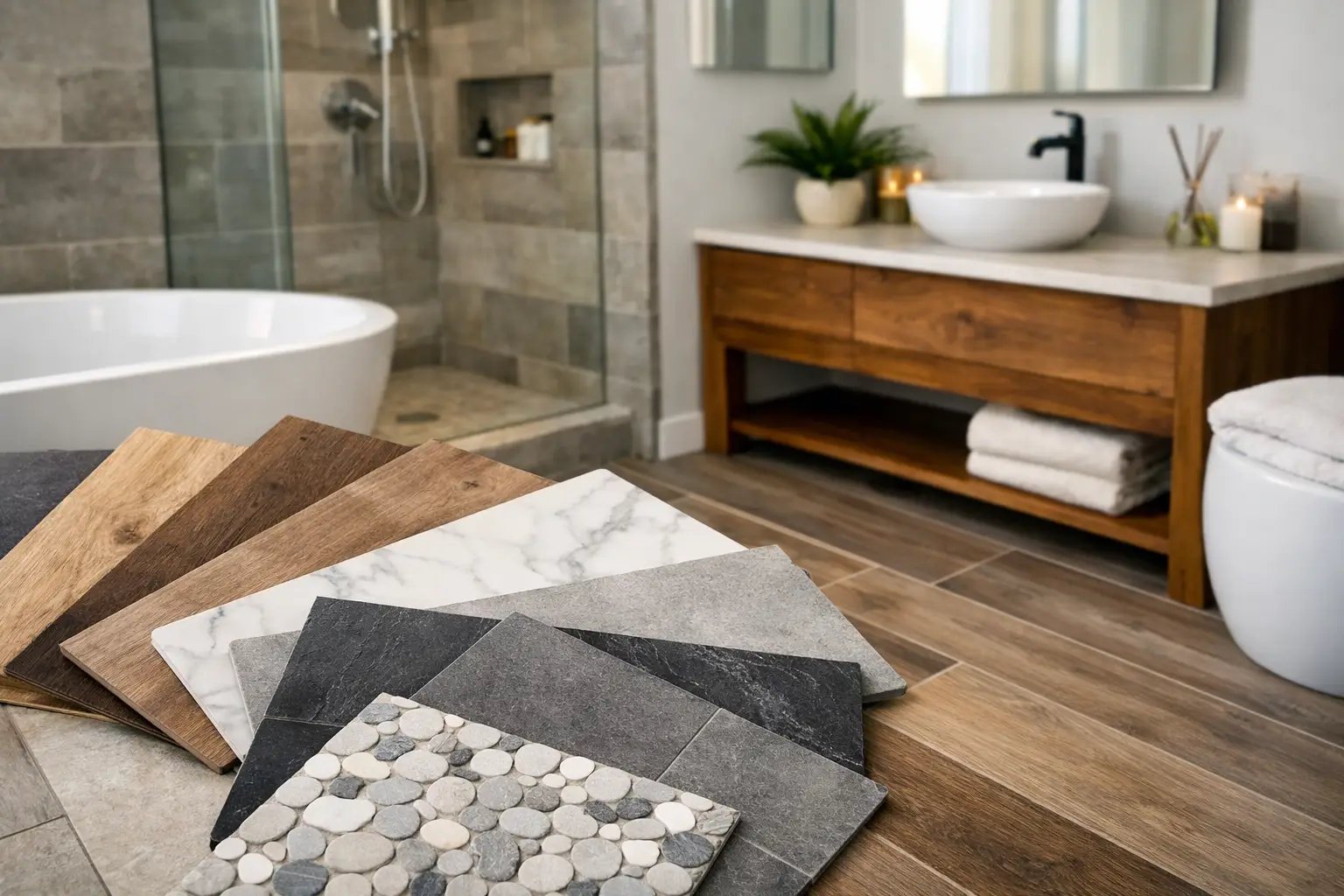
Porcelain tile is still one of the best bathroom flooring options for a reason. It handles moisture well, withstands heavy use, and comes in a wide range of styles. If you want a floor that can look classic, modern, rustic, or clean and simple, porcelain usually gives you the most design flexibility.
It is also one of the most durable choices when installed correctly. A good tile floor can last for decades. That makes it especially appealing for primary bathrooms and family homes where long-term value matters.
The trade-off is comfort and installation complexity. Tile can feel cold, and it is less forgiving underfoot than some other materials. Grout also needs attention over time, especially in bathrooms that see heavy use. Smaller tiles with more grout lines can improve slip resistance, but they also create more cleaning work.
Best fit for porcelain tile
Porcelain works well in almost any bathroom, especially if you want a long-lasting floor and do not mind a harder surface. It is a strong option for homeowners planning to stay put and property owners looking for durability that will hold up over time.
2. Ceramic tile
Ceramic tile is closely related to porcelain and often gets considered in the same category. It can be a practical, budget-friendly way to get the look and performance of tile without paying quite as much.
In many bathrooms, ceramic performs very well. It resists moisture, cleans up easily, and offers plenty of style options. For guest bathrooms or lower-traffic spaces, it can be a very sensible choice.
Where ceramic usually gives up some ground is in durability. It is typically not as dense or as tough as porcelain, so it may chip more easily under impact. That does not make it a bad option. It just means it is worth considering how hard the room gets used and whether the lower upfront cost aligns with your long-term plans.
3. Luxury vinyl plank and luxury vinyl tile
Luxury vinyl has become one of the most popular bathroom flooring choices for practical reasons. Many products are water-resistant or fully waterproof; they are easier on the budget than tile, and they tend to feel warmer and softer underfoot.
For busy households, LVP and LVT solve many problems. They are generally easy to clean, available in styles that mimic wood or stone, and often faster to install than tile. If you are updating a bathroom as part of a larger flooring project in the home, vinyl can also help create a more consistent look from room to room.
Still, not all vinyl products are created equal. Product quality matters, and so does installation. A waterproof plank does not help much if water gets beneath it because the edges, toilet flange, or transitions were not handled properly. In bathrooms, the details make a big difference.
Why homeowners often choose vinyl
Vinyl is often one of the best bathroom flooring options for families, rentals, and second homes because it balances cost, appearance, and performance well. If you want something attractive and dependable without the feel or price of tile, this category deserves a close look.
4. Natural stone
Natural stone can make a bathroom feel custom in a way few materials can. Slate, marble, travertine, and other stone surfaces bring character, variation, and a high-end finish that many homeowners love.
But this is a category where beauty comes with responsibility. Stone needs more maintenance than porcelain or vinyl, and some types are more porous than others. That means sealing, careful product selection, and a realistic understanding of ongoing care.
Slip resistance is another factor. Some polished stone surfaces can be slick when wet. In a bathroom, that matters. If you are drawn to natural stone, it is worth choosing the right finish and considering more than just the showroom sample.
Stone is usually best for homeowners who want a premium look and are comfortable with the upkeep. It can be a great choice in a primary bath remodel where appearance is a top priority, but it is rarely the lowest-maintenance option.
5. Sheet vinyl
Sheet vinyl does not always get the same attention as luxury vinyl, but in some bathrooms, it is a very smart choice. Because it comes in large sheets with fewer seams, it offers excellent water resistance when installed properly. That can be a real advantage in smaller bathrooms where splashes and spills are common.
It is also cost-effective and relatively soft underfoot. For utility-focused bathrooms, rental units, or budget-conscious updates, sheet vinyl can do the job well without making the project more complicated than necessary.
The downside is mostly aesthetic and repair-related. While styles have improved, many homeowners still prefer the look of tile or higher-end vinyl plank. And if sheet vinyl gets damaged, repairs can be more noticeable than replacing an individual tile or plank.
6. Engineered wood
Homeowners often ask about wood in bathrooms because they want warmth and a more furniture-like feel. Solid hardwood is generally a poor choice for bathrooms due to exposure to moisture, but engineered wood can sometimes work in the right setting.
That said, this is one of those it-depends materials. Engineered wood is more stable than solid hardwood, but it is still wood-based and still vulnerable if water sits on it or gets into the seams. In a powder room with light use, it may perform fine. In a full bathroom used by kids every day, it is usually not the safest bet.
If you love the wood look, many luxury vinyl products now do a very convincing job without the same moisture risk. For most full bathrooms, that is the more practical path.
7. Concrete
Concrete is less common in standard bathroom remodels, but it can be a strong option in the right home. It is durable, modern-looking, and can be stained, textured, or finished in different ways. In some spaces, especially on slab foundations, it offers a clean and understated look.
Like stone, concrete needs proper sealing and the right finish to perform well. It can also feel hard and cold. That may not bother every homeowner, but it is worth thinking about if comfort is high on your list.
Concrete usually makes the most sense when it fits the home's overall style, and the bathroom is already set up for it. It is not the default answer for most remodels, but in the right project, it can be a very durable one.
How to choose the right bathroom floor for your home
If you are narrowing down the best bathroom flooring options, start with how the room is actually used. A kids' bathroom needs a different level of toughness than a guest bath that sees occasional use. A rental property may call for easy maintenance and straightforward replacement. A primary suite may justify spending more for comfort and appearance.
Think about who is cleaning it, too. Tile and grout can be worth it for the long haul, but some homeowners prefer the lower-maintenance routine that comes with vinyl. Also, consider whether the bathroom gets cold. In parts of Colorado, that can make a hard surface feel a lot less appealing during winter mornings unless you plan for rugs or radiant heat.
Subfloor condition and installation quality should not be an afterthought. Even the best material can fail if the floor below it is uneven, soft, or damaged from past leaks. This is where experienced guidance helps. A good contractor looks beyond the finished floor and ensures the entire assembly is ready for a wet environment.
The material matters, but the install matters just as much
Homeowners sometimes focus so much on product selection that they overlook the bigger risk: poor installation. Bathrooms are unforgiving. A loose toilet, weak underlayment, poor transition, or poorly sealed edge can cause damage long before the flooring itself wears out.
That is why the best bathroom flooring options are only as good as the prep work and installation behind them. The right choice is the one that fits your budget, your style, and how your household lives, and that gets installed the first time correctly.
If you are planning a bathroom update, it helps to talk through the trade-offs before the work begins. A floor should not just look good on day one. It should still make sense after years of daily use, cleaning, and real life in your home. That is usually where the best decisions come from.
Aurthor:
Robby Bates