A door that needs a firm shoulder-check to close is more than an everyday annoyance. It can let in cold air, strain its hardware, compromise security, and make an otherwise well-kept home feel neglected. Homeowners often ask, “when should doors be replaced?” The answer depends on what is causing the problem, whether the door still protects the home, and whether a targeted repair will genuinely last.
A sticking door does not always mean replacement is necessary. Seasonal movement, loose hinges, worn weatherstripping, and minor settling can often be repaired. But when damage, poor performance, or safety concerns keep returning, a new door may be the smarter long-term investment.
When Should Doors Be Replaced Instead of Repaired?
The first question is not whether a door looks old. It is whether it is still doing its job. Exterior doors should close securely, block weather, operate easily, and give you confidence that your home is protected. Interior doors should provide privacy, work smoothly, and suit the room's needs.
Replacement is usually the right choice when the door itself has failed, not just an attached part. A worn hinge, loose strike plate, damaged sweep, or tired lock can often be replaced. A door that is warped, rotted, cracked through, or too damaged to seal properly usually cannot be restored to dependable condition with a small repair.
For rental owners and property managers, recurring door problems are especially worth addressing. Repeated service calls for a bedroom latch, entry door draft, or damaged jamb can cost more over time than a well-planned replacement. A dependable door improves the resident experience while reducing maintenance surprises.
8 Signs It Is Time for a New Door
1. The door is warped, cracked, or rotting
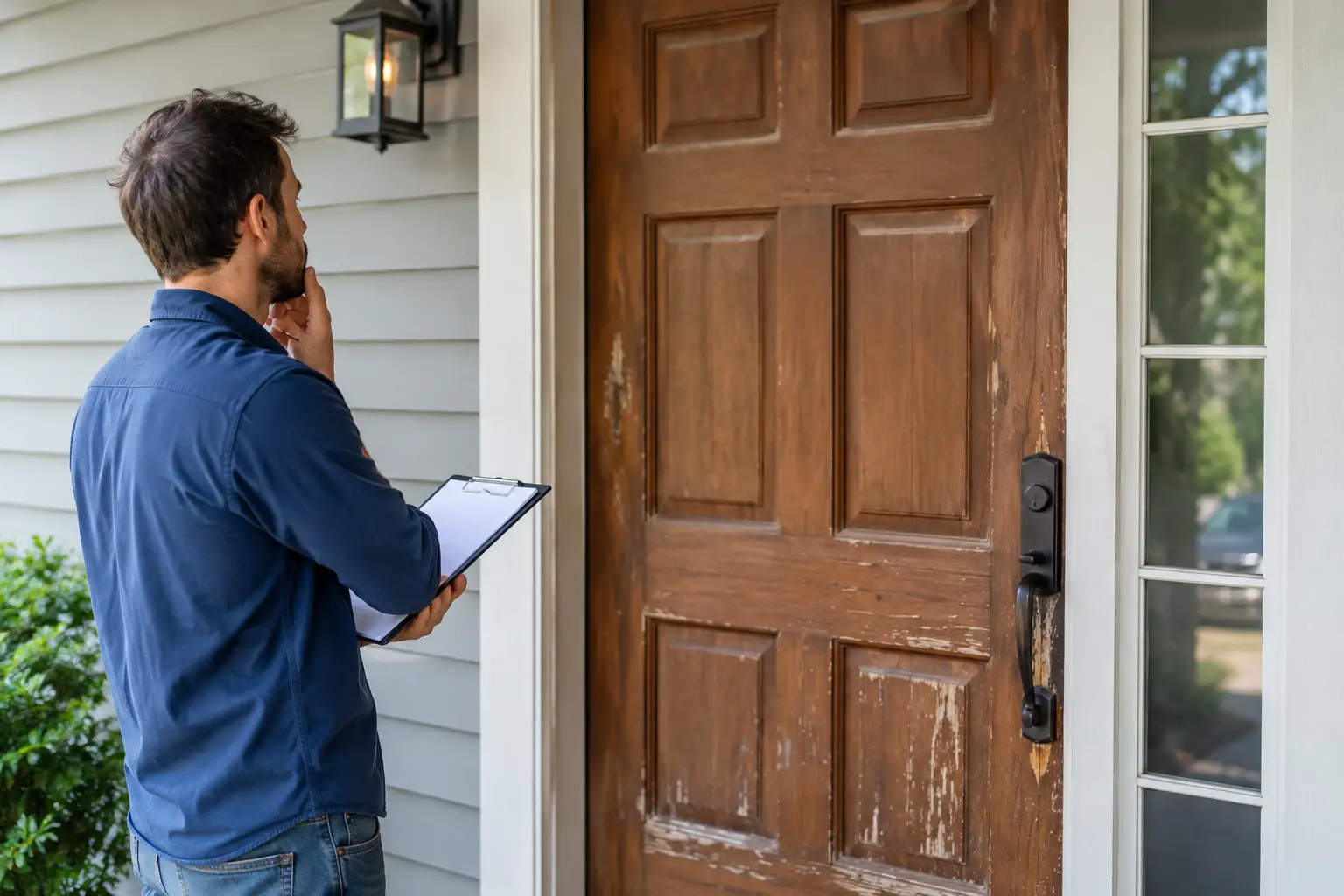
Wood doors can develop cracks, swelling, and rot after years of moisture exposure. Fiberglass and steel doors can also deteriorate through impact damage, rust, or separation at joints. If the door has changed shape, it may no longer sit squarely in the frame, making a reliable seal difficult.
Surface wear alone is not always a reason to replace it. Peeling paint or a shallow dent may be repairable. Soft wood, deep cracks, visible rot, or a door that bows away from the frame are different issues. Those conditions often worsen with time and weather.
2. You feel drafts or see daylight around the edges
A small amount of light at the bottom of an exterior door may point to a worn door sweep. Light along the sides or top may mean the door, frame, or weatherstripping is misaligned. Before replacing the door, check whether new weatherstripping or an adjustment can solve the problem.
If gaps persist after those repairs, you may need to replace the door. Drafts affect comfort, raise heating and cooling costs, and allow dust, moisture, and insects into the home. In the Arkansas River Valley, where weather can shift quickly and temperatures vary widely year-round, a tight exterior door seal matters.
3. The door sticks, drags, or will not latch consistently
A door can stick because of humidity, settling, or a loose hinge. Those causes are often manageable. However, a door that has been repeatedly trimmed, adjusted, or forced into place may be nearing the end of its useful life.
Pay attention to latching. An exterior door should close and lock without lifting, pushing hard, or pulling it back into position. If the latch misses the strike plate because the door is warped or the frame has moved significantly, a contractor should assess the entire opening. Replacing only the slab may not solve a framing or jamb problem.
4. The lock or frame no longer feels secure
An entry door is part of your home’s security system. Cracked jambs, loose hinges, damaged lock areas, and doors that flex under pressure deserve prompt attention. Sometimes a reinforced strike plate, new lockset, or jamb repair is enough. In other cases, the door and frame have both weakened and should be replaced together.
This is one situation where waiting is rarely worthwhile. If you don't feel confident a door closes and locks securely, schedule an evaluation before a minor issue becomes a larger one.
5. There is moisture between glass panes or around the frame
Fogging between insulated glass panes means the seal has failed. Depending on the door style, you may be able to replace the glass insert without replacing the entire door. Moisture around the frame, soft trim, staining, or peeling paint is more concerning because it may signal water intrusion.
The water source matters as much as the visible damage. It could be failed caulking, missing flashing, a poor threshold seal, or drainage directing water toward the opening. Replacing a door without correcting the cause can lead to the same problem again.
6. Repairs keep adding up
One repair is normal home maintenance. A cycle of adjustments, new weatherstripping, patched veneer, lock repairs, and repeated painting is a sign to consider replacement. This does not mean every older door must be removed. A solid, well-built door may be worth restoring.
The practical decision comes down to cost, expected lifespan, and performance. If a repair will provide several more reliable years, it may be the sensible option. If it only buys a short period before the next issue, replacing the unit can offer better value and less disruption.
7. The door no longer fits how you use the home
Sometimes the door is structurally sound but functionally wrong. A narrow laundry-room door that makes appliance access difficult, a swinging pantry door that crowds the kitchen, or a worn hollow-core bedroom door that provides little sound control may be worth upgrading during a remodel.
Exterior doors can also be replaced for practical reasons. Homeowners may want more natural light, easier patio access, a pet-friendly solution, or an entry that better matches the home’s style. These are not emergency replacements, but they can improve daily life in a meaningful way.
8. The door hurts curb appeal or the room’s finish
A faded, dented, mismatched, or outdated door can pull attention away from the rest of the home. This is especially noticeable at the front entry, where the door sets the tone for visitors, buyers, and prospective tenants.
Appearance should not be the only reason to replace a usable door, but it is a valid part of an upgrade plan. A new front door, updated interior doors, or coordinated hardware can make a home feel more intentional without taking on a full renovation.
Consider the Frame, Hardware, and Installation
A door replacement is only as good as the installation around it. The door slab, hinges, jamb, threshold, weatherstripping, trim, locks, and exterior sealing must all work together. That is why an opening should be inspected before selecting a new door.
For example, replacing an interior slab may be straightforward if the existing frame is square and in good condition. An exterior entry with water damage or poor alignment may need a prehung unit, jamb repairs, trim work, and careful sealing. It is a larger job, but it addresses the problem at its source.
Material choices also involve trade-offs. Wood offers warmth and repairability but requires regular maintenance. Fiberglass is durable and handles changing weather well. Steel can provide strong security and value, though dents and rust need attention. The best choice depends on the door location, exposure, budget, and the look you want for the home.
Plan the Project Before the Problem Gets Worse
If a door is difficult to use but still secure, planning ahead gives you more options. You can choose a style, material, glass design, and hardware that fit the home instead of making a rushed decision after a failure. For occupied rentals, scheduling work between tenants can also reduce inconvenience.
A hands-on assessment can separate a simple repair from a replacement that will save money and frustration down the road. Salida Home Services helps homeowners and property managers evaluate the condition of the full opening, explain the scope clearly, and discuss any needed changes before work moves forward.
A good door should be easy to open, secure when closed, and quiet in the background of daily life. If yours is making itself known every time you leave or come home,it is worth getting a clear answer before the next season puts it to the test
Aurthor:
Robby Bates